It happens more often than suppliers like to admit. A brand requests a triangular gift box for a premium spirit. Or a pentagonal cosmetic container that sits flat on a shelf but opens with an unexpected hinge. Or a very shallow rigid tray—just 12mm deep—that every standard case making line rejects because the folding plates can't get low enough.
The standard answer from most equipment vendors: "Sorry, our machine only handles rectangles."
But rectangles are not the full market. According to a 2024 packaging design survey, nearly 18% of new rigid box projects involve a non-rectangular footprint or an aspect ratio outside typical industry ranges (3:1 to 1:3). That is a significant slice of business that standard tooling simply cannot touch.
So how do production teams actually run these special orders without turning every job into a three-week engineering project? The answer is purpose-built custom tooling—and a clear understanding of what can be modified.
Before discussing customization, let us define the term. On a rigid box making line, tooling refers to the physical components that touch and form the box:
| Tooling Component | Function | Customization Potential |
|---|---|---|
| Folding plates | Guide the wrapped paper around board edges | Shape, angle, and travel path |
| Grooving dies | Cut or score the groove for box closure | Depth, width, and spacing |
| Side guides | Position the board laterally | Width range, material contact surface |
| Glue applicator nozzles | Apply adhesive to specific zones | Pattern, width, and location |
| Feeder pickups | Separate and feed board from stack | Vacuum cup pattern, stroke length |
Standard tooling is designed for rectangular boxes with aspect ratios between 1:1 and 3:1. Once you move outside that envelope—or into multi-sided shapes—custom engineering is required.
Based on conversations with packaging engineers, three non-standard requirements come up repeatedly.
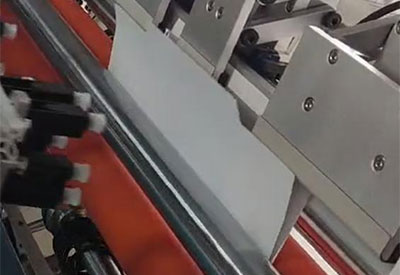
The challenge: Folding plates on standard machines assume 90-degree corners. A triangle has 60-degree corners. A pentagon has 108-degree corners. Standard plates will either under-fold (leaving loose paper) or over-fold (crushing the board).
The solution: Custom-angled folding plates machined to the specific corner geometry of the shape. Additionally, the side guides must be modified to index from multiple reference points, not just two perpendicular edges.
Real-world example: A wine gift box producer needed a triangular box for a premium sake set. The solution involved custom folding plates with adjustable cam dwell—allowing the machine to hold the fold slightly longer to set the glue on the acute angle.
The challenge: Standard folding stations are designed for box heights of 25–100mm. Below 20mm, the folding plates cannot position themselves low enough to wrap the paper without colliding with the conveyor.
The solution: Recessed folding plate mounts and modified lift tables that raise the box slightly during the folding cycle. Some suppliers also use servo-driven folding heads that can lower independently of the main carriage.
What to ask a potential vendor: "What is your minimum folding height without custom plates? With custom plates?" If the answer is above 20mm and they cannot engineer a lower solution, they are not equipped for shallow trays.
The challenge: A cosmetic compact of 50×50mm and a tobacco gift set of 400×300mm are worlds apart. Standard machines have fixed side guide travel limits.
The solution: Extended guide rails and relocated sensor brackets. For very small boxes, additional tooling adapters reduce the gap between guides so the board cannot rotate during feeding. For very large boxes, extended folding plates and a slower glue cure time are typically required.
The hidden cost: Changeover time. Machines with extended guide ranges often take longer to switch between extremes. Dual-range tooling sets (one for small boxes, one for large) can reduce changeover time by keeping adjustments within a narrower band.
Many buyers assume custom tooling means months of waiting and endless prototyping. In reality, a competent supplier follows a predictable workflow.
Step 1: Sample submission. You provide one assembled box (or detailed 3D drawing). The supplier measures corner radii, fold overlap, and board thickness.
Step 2: CAD review. The supplier creates a tooling drawing showing how folding plates, grooving dies, and side guides will interact. Approve before metal cutting begins.
Step 3: Fabrication. Typical lead time: 15–25 business days for a full set (folding plates, guides, and glue nozzles).
Step 4: Test run. The supplier runs your box samples on their floor before shipping the tooling. You receive a video of the test and a list of recommended machine settings (speed, glue temperature, press time).
Step 5: On-site validation. Install the tooling and run a short batch. Expect 1–2 hours of tuning. The first 50 boxes may need adjustments; the next 500 should run clean.
Custom tooling is not cheap. A full set (folding plates, side guides, grooving dies) typically ranges from 3,000to3,000to8,000 depending on complexity. That leads to the obvious question: Is it worth it?
Run the numbers:
| Annual Volume of Special-Shape Boxes | Tooling Cost per Box (Amortized Over 2 Years) | Verdict |
|---|---|---|
| 5,000 | 0.60–0.60–1.60 | High cost, but viable for premium products |
| 20,000 | 0.15–0.15–0.40 | Economical |
| 50,000+ | 0.06–0.06–0.16 | Strong ROI |
If you are producing more than 10,000 special-shape boxes annually, custom tooling pays for itself quickly. Below that volume, consider whether the brand value of a unique package justifies the per-unit tooling cost.
Some rigid box lines now offer modular tooling systems that use standardized mounting interfaces. Instead of machining an entire folding plate from scratch, the supplier machines only the contact surface (the part that touches the paper) and mounts it onto a standard carrier plate.
Advantages of modular tooling:
Lower cost (1,500–1,500–3,500 per set)
Faster lead time (10–15 business days)
Easier to modify (replace just the contact surface if a corner radius changes)
Disadvantage: Slightly less rigidity than solid-machined tooling. For very high speeds (above 25 boxes/minute) or heavy board (over 3mm), solid tooling is still preferred.
Use this checklist when evaluating suppliers for a non-standard box project:
"What is the smallest and largest box dimension your standard tooling handles?" If your size falls outside, ask for examples of custom work at similar extremes.
"Do you have CAD files of previous custom tooling projects?" This indicates experience, not just willingness.
"What is your test-run policy for custom tooling?" A supplier that runs your samples before shipping is far more reliable than one that ships untested metal.
"Can I see a video of a triangular or pentagonal box running on your line?" If they hesitate, they may not have done it before.
"What is the lead time for replacement contact surfaces?" Wearing parts will eventually need replacement. Know the reorder process upfront.
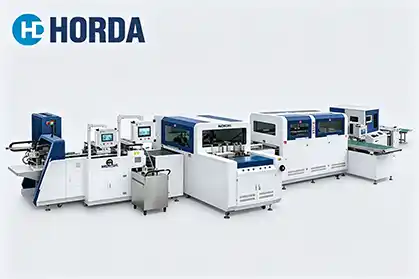
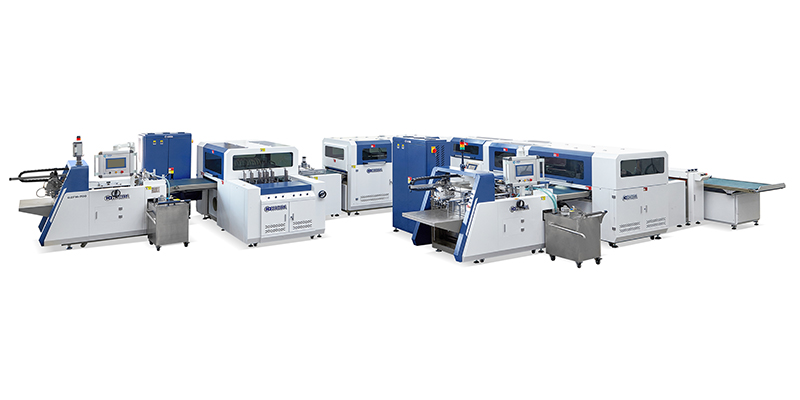
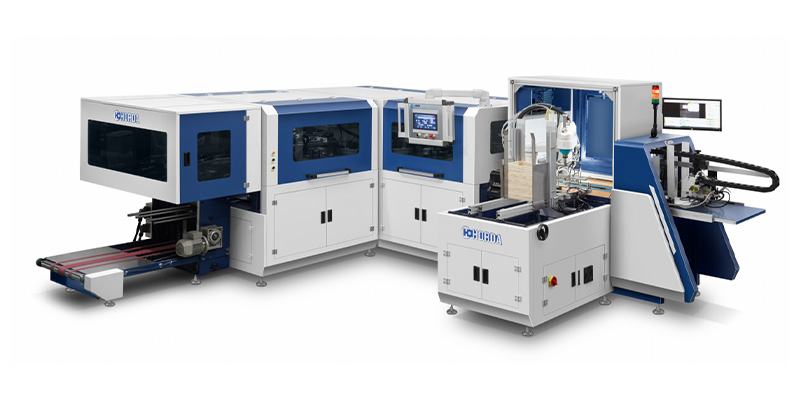
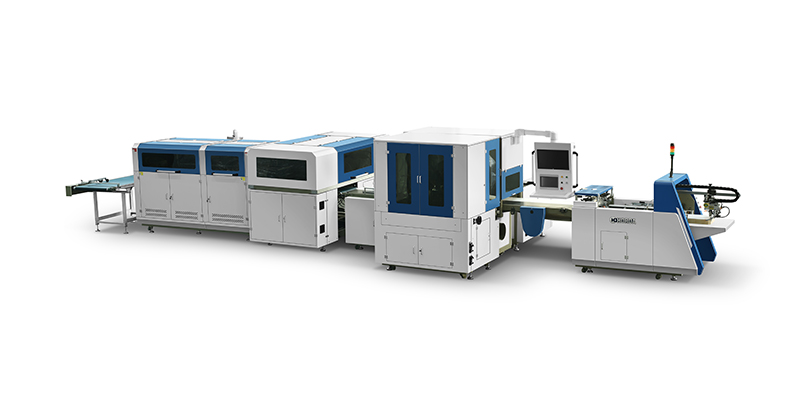
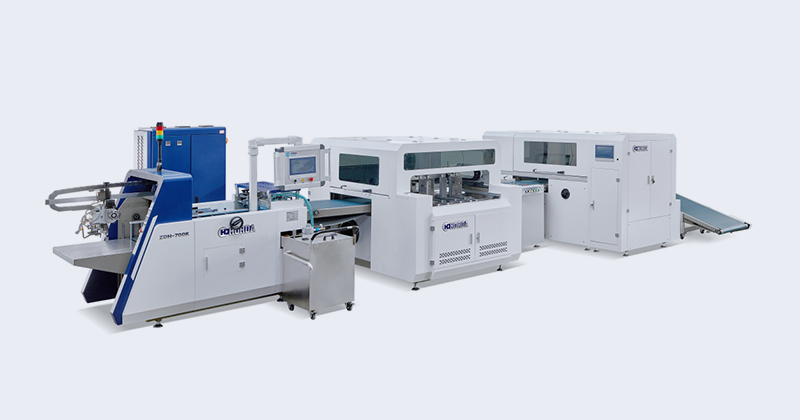
Horda's cover linkage line series is designed with modular tooling interfaces on folding plates, side guides, and grooving stations. The platform accepts both solid-machined and modular contact surfaces, and the 12-servo architecture allows fine adjustment of folding speed and pressure independently for each corner—critical for non-rectangular shapes.
For buyers regularly running non-standard sizes or complex shapes, click here to explore the flexible tooling configurations available on the cover linkage line series. The product pages include dimensional limits and examples of previous custom projects.
Standard tooling exists for a reason: rectangles are 80% of the market. But the remaining 20%—triangles, pentagons, shallow trays, and extreme aspect ratios—represents both a challenge and an opportunity.
Winning those special-shape orders requires planning, not luck. Understand which tooling components need modification, budget for the engineering lead time, and work with a supplier that has a documented custom tooling process. The brand value of a unique package often justifies the investment—especially when your competitors cannot run the job at all.

 English
 Español
 Português