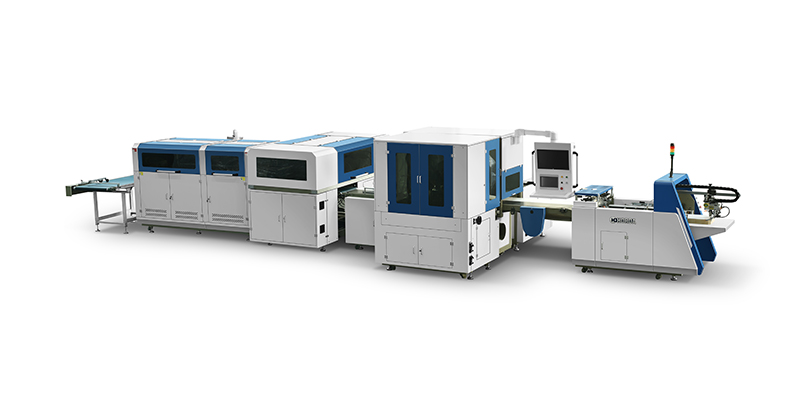
It is 4:30 PM. The shipping deadline is 6:00 PM. Your rigid box line is running—but barely. The glue station is gumming up every 20 minutes. The folding section just jammed for the third time today. The operator is cranking handles to adjust for the next box size, and you can see the overtime budget burning.
This is not a machinery problem. This is a throughput bottleneck problem. And it costs far more than the price of a new conveyor.
According to a 2025 Packaging Efficiency Report, unplanned downtime and slow changeovers account for an average of 18 lost production hours per month on mid-speed rigid box lines. That is over 200 hours per year—nearly a full month of shifted output gone.
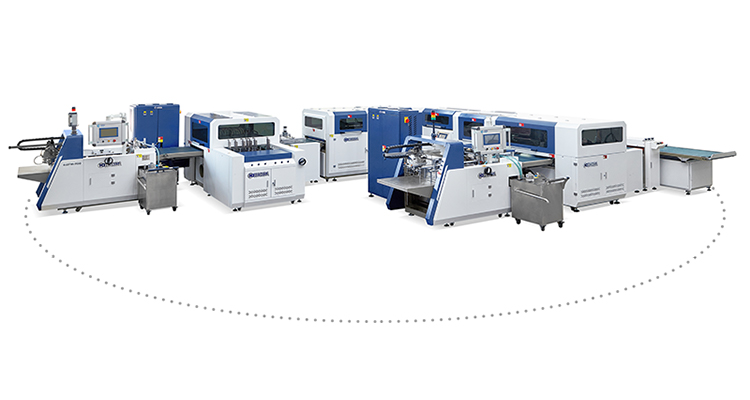
So, where is your line losing time? Let us walk through the five most common speed killers and how to fix them.
Here is a quick test. Time your next size changeover from the last good box of Product A to the first good box of Product B.
Under 15 minutes: You are in the top quartile. Well done.
15–30 minutes: Average. Room for improvement.
Over 30 minutes: You are losing thousands per changeover.
Root cause: Mechanical adjustments. Cranks, screws, and lock nuts. Each adjustment point requires an operator to stop the line, grab a wrench, turn, measure, test, adjust again.
The fix: Servo-driven adjustable side guides and digital format presets. Modern rigid box lines store dimensions for 50+ box styles. The operator selects "Product B" on a touchscreen, and the side guides, glue nozzles, and folding pockets reposition automatically.
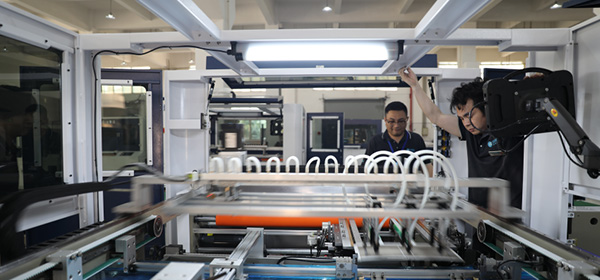
A wine gift box manufacturer in Chongqing reported cutting the changeover time from 35 minutes to under 8 minutes after upgrading to servo-adjustable format guides. Over 10 changeovers per week, which recovered 4.5 production hours every week.
Cold glue is cheap and strong. But it takes time to set. If your line moves boxes into the stacking station before the glue is dry, the corners spring open. So operators slow the line. Or they add manual drying racks.
Real-world numbers: A pharmaceutical rigid box line running cold glue at 18 boxes/minute may produce only 12 usable boxes/minute because the last 6 need extra drying time.
The fix: Controlled-temperature gluing and short-dry formulations. Hot melt glue sets in seconds—but requires heated hoses and viscosity monitoring. A hybrid approach uses heated cold glue (thermally accelerated) that cuts drying time by 60% without switching to full hot melt.
Pro tip: Ask your glue supplier for a viscosity curve for your shop floor's average temperature. If the line cannot maintain that curve automatically, you will chase settings all shift.
Your case-making line starts the shift aligned perfectly. An hour later, the wrap is shifting 2mm to the left. The operator tweaks the feeder. Twenty minutes later, it drifts again.
Root cause: Mechanical registration stops wearing over time. Vibration loosens set screws. Board warpage changes with humidity.
The fix: Photoelectric registration with servo correction. Three sensors continuously monitor the board's leading edge and lateral position. If the board drifts, the servo-driven positioning table shifts the board path in real time—before the glue is applied.
One mobile phone gift box supplier tracked registration-related rejects falling from 4.8% to 1.1% after installing a triple-sensor registration system. That is 3,700 fewer scrapped boxes per 100,000 produced.
If your line includes inner paper laminating (common for cosmetic and tobacco rigid boxes), this may be your biggest hidden delay.
Manual transfer from case maker to laminator requires:
An operator to pick each shell
Place it onto the laminator infeed
Align it manually
Throughput drop: 20–30%. Plus handling damage.
The fix: Inline turning mechanism. The finished shell is flipped directly into the laminating station via a powered turnover unit. No human touch. No alignment guesswork. The glue is still wet when the inner paper is pressed, which eliminates bubbling defects.
The efficiency gain: One integrated line with inline lamination can run at 15–25 boxes/minute with one operator. A separate case maker + separate laminator with manual transfer needs two operators and runs at 10–12 boxes/minute due to handling delays.
Not glamorous. But real.
Cardboard dust builds up on glue rollers. Dust prevents adhesion. The operator stops the line to clean the rollers. Production stops.
The fix: Sealed glue units with automatic constant temperature heating (prevents moisture condensation that makes dust stick) and removable glue tanks for quick cleaning.
Ask your supplier: "How many boxes can I run before the glue unit needs cleaning on standard grey board?" If the answer is vague, request a test with your actual board stock.
Let us add up the potential gains from fixing these five bottlenecks on a typical mid-speed rigid box line (current baseline: 12 usable boxes/minute, 70% OEE).
| Fix | Estimated Throughput Gain |
|---|---|
| Servo changeovers (saves 30 min/day) | +6% |
| Short-dry gluing (reduces waiting) | +8% |
| Registration sensors (reduces rejects) | +7% |
| Inline lamination (cuts handling) | +9% |
| Sealed glue unit (less cleaning downtime) | +4% |
| Potential total uplift | +34% |
A line producing 500,000 boxes annually at 12/min could potentially reach 670,000 boxes with these upgrades—on the same floor space, with the same number of shifts.
Use this checklist when evaluating any cover line speed upgrade:
"Show me a changeover on video." Watch how many tools the operator touches. Count the steps.
"What is the registration tolerance on warped board?" Look for ±0.2mm or better with photoelectric correction.
"Is the glue viscosity controlled automatically?" If not, budget for a viscosity controller as an add-on.
"Can the turning mechanism handle my smallest and largest boxes?" Bring samples.
"What is the MTBF (Mean Time Between Failures) on the feeder?" A servo-driven feeder should exceed 5,000 hours.
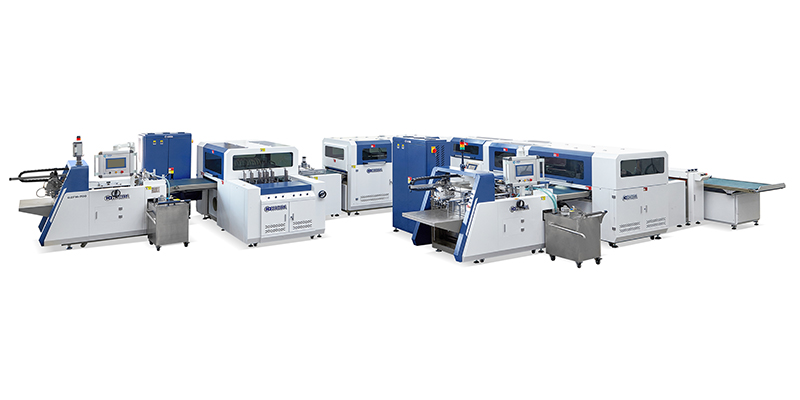
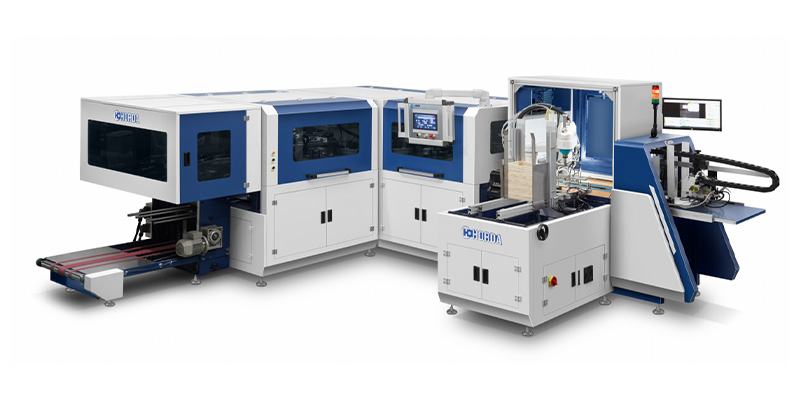
Horda's cover linkage line series addresses these five bottlenecks through a 12-servo-system architecture that synchronizes feeding, gluing, folding, and laminating modules. The platform includes:
Digital format presets (tool-less changeovers)
Photoelectric registration (real-time correction)
Inline turning mechanism (eliminates manual transfer)
Removable glue tanks (quick cleaning)
If you want to see how a fully integrated carton machine production efficiency upgrade is configured for different box types (cosmetic, tobacco, mobile phone, gift), click here to explore the modular cover line configurations. The product pages include video demonstrations of servo-driven changeovers and inline laminating.
Speed is not about the peak boxes-per-minute number on a brochure. It is about sustainable throughput—the boxes that actually reach the pallet, shift after shift.
Fix the changeovers, the glue waiting, the registration drift, the lamination handoff, and the dust cleaning. In that order. And suddenly your 4:30 PM panic becomes a 4:30 PM "ship it."

 English
 Español
 Português