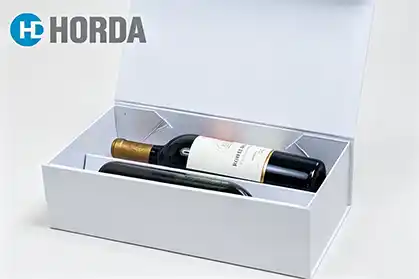
A customer picks up a perfume gift set or a luxury skincare box. Before they read the label, before they see the product, their fingers touch the inner lining. If it feels plush, secure, and perfectly adhered, the brain registers "quality." If the lining wrinkles, shifts, or has a loose corner, the entire product feels cheap—regardless of what is inside.
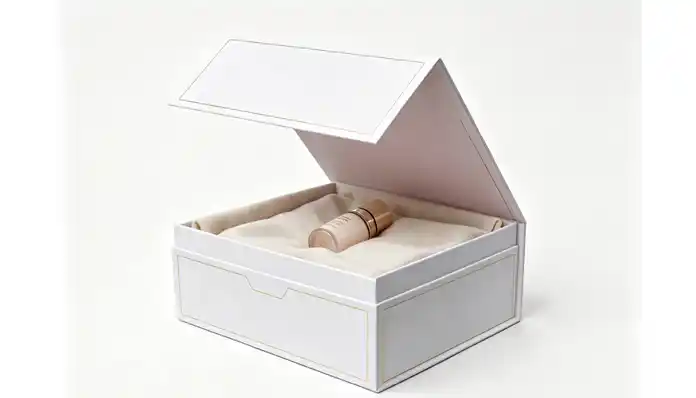
This is not subjective. A 2024 consumer packaging study found that 62% of premium beauty buyers associated the quality of the inner packaging finish directly with the quality of the product itself. For cosmetics boxes—where brand perception drives repeat purchases—the inner lining is not an afterthought. It is a sales tool.
Yet many production teams struggle to laminate inner liners consistently. Bubbles, wrinkles, and edge peeling are common defects. This article walks through why those defects happen and how a dedicated case lining line solves them.
Not all inner lining defects come from operator error. Most trace back to equipment limitations.
Cause #1: Glue Skin-Over
The most frequent failure: The glue applied to the inner paper dries partially before the paper meets the rigid box shell. This is called "skin-over." When the press comes down, the dry glue skin does not bond. The result: bubbles or sections where the liner simply lifts away.
What causes it: Excessive transfer time between gluing and pressing. If the line takes more than 3–5 seconds to move from glue application to lamination, the glue starts setting.
Cause #2: Registration Misalignment
The inner paper must align precisely with the box shell. If it shifts even 2mm, the liner may cover part of the box wall or leave an exposed gap. For cosmetic boxes with cutouts for product display, precise registration is critical.
What causes it: Manual placement of shells onto the laminator, or mechanical registration stops that allow drift.
Cause #3: Inconsistent Glue Coverage
Velvet and leatherette liners are not as porous as paper. They require different glue patterns and application pressures. Standard glue nozzles that work well for paper liners often starve or flood textured materials.
What causes it: Fixed glue applicators without adjustable flow or pattern controls.
There are fundamentally two approaches to adding inner liners to rigid boxes. The differences in cost, speed, and quality are substantial.
| Factor | Manual Transfer (Separate Machines) | Inline Lamination (Integrated Line) |
|---|---|---|
| Process | Case maker outputs shells → operator picks each shell → places onto laminator infeed | Case maker → turning mechanism → laminator (no human touch) |
| Typical speed | 8–12 boxes/minute | 15–25 boxes/minute |
| Operators needed | 2 (one for case maker, one for laminator) | 1 |
| Registration method | Operator eye + mechanical stops | Photoelectric sensors + servo positioning |
| Glue transfer time | 4–8 seconds (risk of skin-over) | 1–2 seconds (glue stays wet) |
| Defect rate (typical) | 3–6% | 0.5–1.5% |
A perfume box producer who switched from manual transfer to inline lamination reported their inner lining reject rate dropping from 5.2% to 0.9% within three months. For a line producing 500,000 boxes annually, that is 21,500 fewer scrapped units.
An effective case lining line is not just a laminator placed next to a case maker. It requires three specific technologies to work as an integrated system.
After the rigid box shell is formed, it exits the case maker face-up. But most laminators feed shell-side down. A powered turning mechanism flips the shell 180 degrees without human handling.
Why it matters: No operator touch means no fingerprints, no handling scratches, and no alignment guesswork. The flip takes under one second, keeping glue wet.
For cosmetics boxes with complex shapes or cutouts, mechanical stops are not accurate enough. CCD cameras photograph the shell or the inner paper before lamination, detect any position deviation, and send correction signals to servo-driven positioning tables.
Real-world accuracy: ±0.2mm. For context, a human hair is about 0.07mm. So we are talking about precision within 2–3 hair widths.
Inner liners—especially velvet and leatherette—leave fibers and residue in the glue. If the glue tank is difficult to clean, operators will postpone cleaning. Dirty glue leads to inconsistent application and eventual nozzle clogging.
The feature to look for: A removable glue tank that can be taken to a cleaning station rather than requiring the operator to crawl inside the machine.
Not all case lining equipment handles all liner materials. Here is a practical compatibility guide:
| Liner Material | Key Challenge | Required Machine Feature |
|---|---|---|
| Velvet / flocked paper | Fibers shed into glue; delicate surface | Removable glue tank, adjustable nip pressure |
| Leatherette / PU | Non-porous; glue needs longer wet time | Extended open time glue system, heated press |
| Textured specialty paper | Irregular surface needs even pressure | Servo-controlled press with pressure profiling |
| Standard coated paper | Easy baseline | Standard configuration works |
What to ask a supplier: "Show me samples of velvet and leatherette liners run on your machine." If they cannot produce acceptable samples, keep looking.
Some packaging buyers attempt to save money by using multi-purpose equipment that claims to "also do laminating." Here is what that usually means in practice:
Slower changeovers (reconfiguring between case making and laminating)
Higher defect rates (compromised registration)
More operator training (one machine, two very different processes)
Lower effective speed (the machine cannot run both functions simultaneously)
A skincare gift box manufacturer who tried this approach reported effective throughput of only 9 boxes/minute on a machine rated for 25 boxes/minute—because half the time was spent switching configurations and re-aligning after each changeover.
The dedicated case lining line avoids this entirely by keeping laminating as a separate, always-ready module.
Consider a typical luxury cosmetics launch: a limited edition holiday set, 50,000 units, each containing a rigid box with a velvet inner liner and a cutout for the product.
Production options:
Manual transfer: 10 boxes/minute × 2 operators = 5,000 boxes per shift → 10 shifts (80 hours) to complete
Inline lamination: 20 boxes/minute × 1 operator = 9,600 boxes per shift → just over 5 shifts (40 hours) to complete
The inline line finishes in half the time with half the labor and fewer defects. That is not just efficiency; that is the difference between meeting a holiday deadline and missing it.
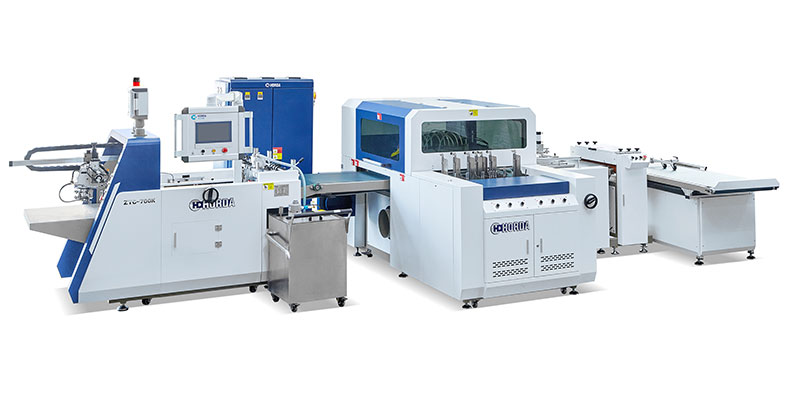
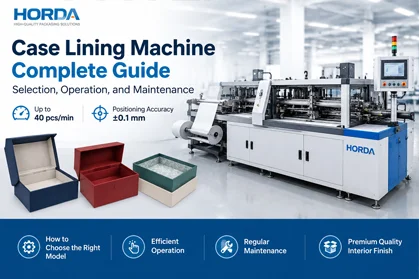
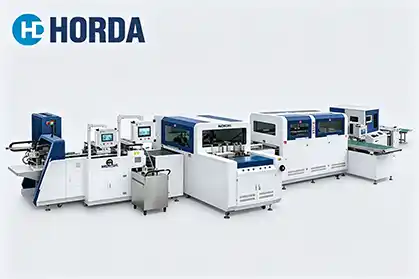
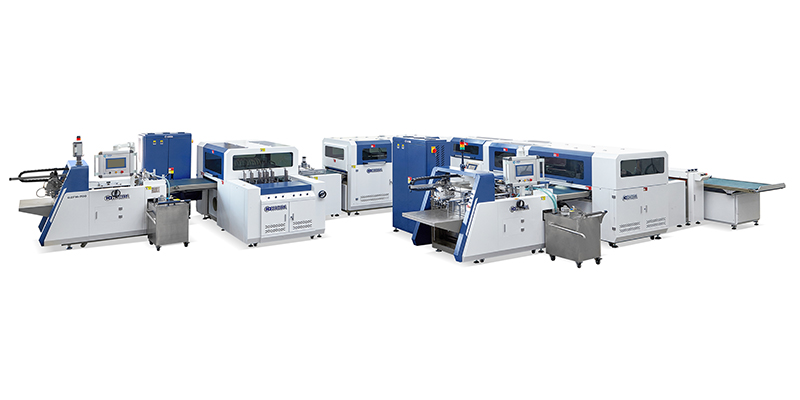
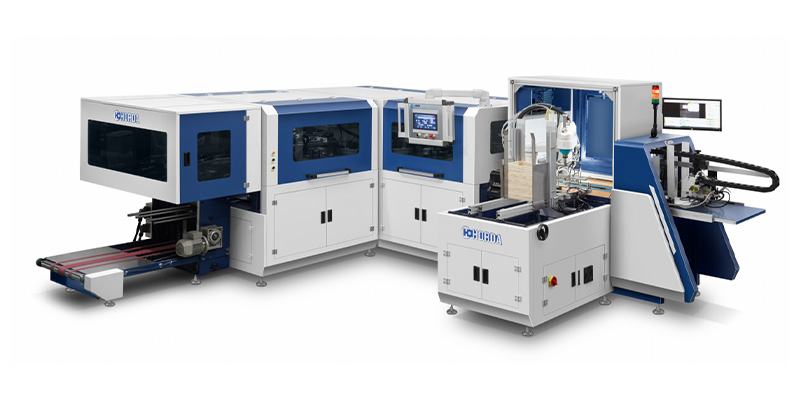
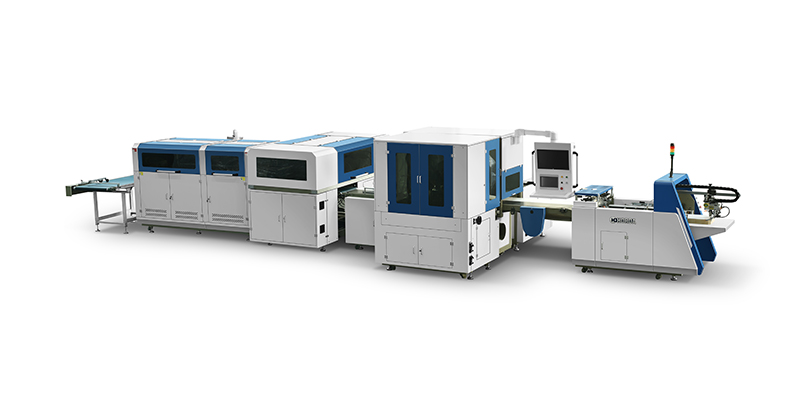
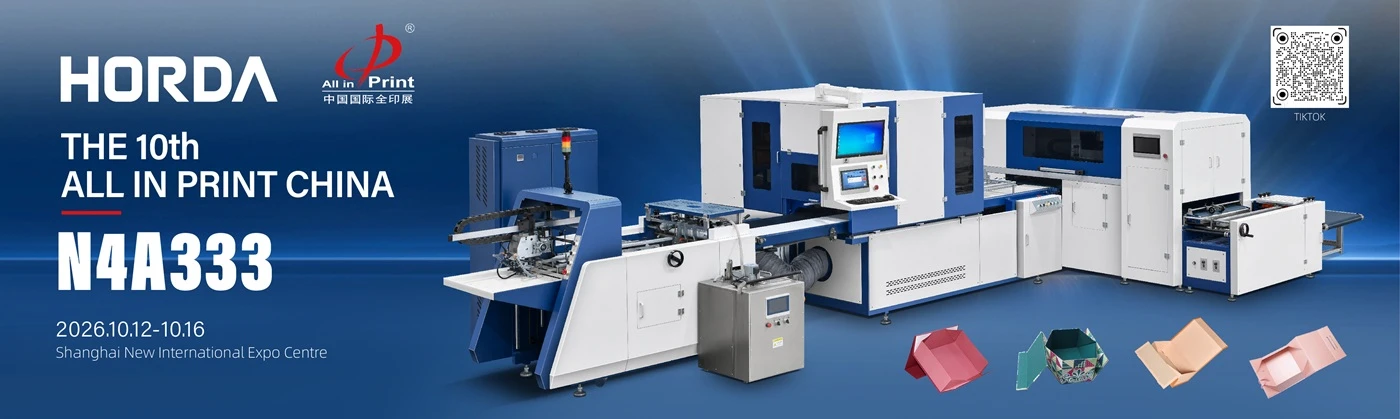
Horda's case lining machine line includes the ZTC-700B model with CCD camera positioning, a special feeder derived from printing press technology, and removable glue tanks. The platform runs at up to 40 pieces/minute and handles liner materials including coated paper, specialty paper, synthetic paper, and cloth.
The system integrates with Horda case makers via a powered turning mechanism, creating a complete inline lamination workflow that eliminates manual transfer.
For brands producing premium cosmetic, perfume, or skincare gift boxes, click here to explore the case lining machine specifications and liner material compatibility options. The product page includes customer feedback from packaging production leads and quality control directors.
The inner lining of a luxury cosmetics box is not a detail—it is a brand statement. Bubbles, wrinkles, and peeling corners signal "cheap" to the customer, regardless of the product's actual value.
Achieving flawless lamination at scale requires inline integration (to prevent glue skin-over), precision registration (CCD or photoelectric), and material-appropriate glue systems. Separate machines with manual transfer will always struggle with consistency and speed.
Invest in a dedicated case lining that is designed for the specific challenges of velvet, leatherette, and textured papers. Your defect rate—and your brand perception—will reflect the difference.

 English
 Español
 Português