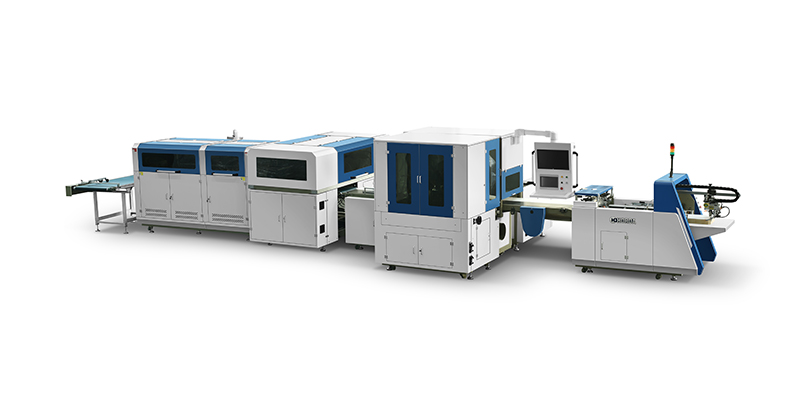
The short answer: because the math stopped working years ago. Packaging manufacturers consistently discover that hiring more people to meet growing demand rarely delivers the ROI they expect. A collapsible box making machine handles repetitive precision folding and gluing tasks that would otherwise consume dozens of labor hours daily, and most facilities recover their investment within 12 to 24 months. If you’ve been scaling your box production by adding shift after shift, you’ve likely already noticed the cracks in that model.
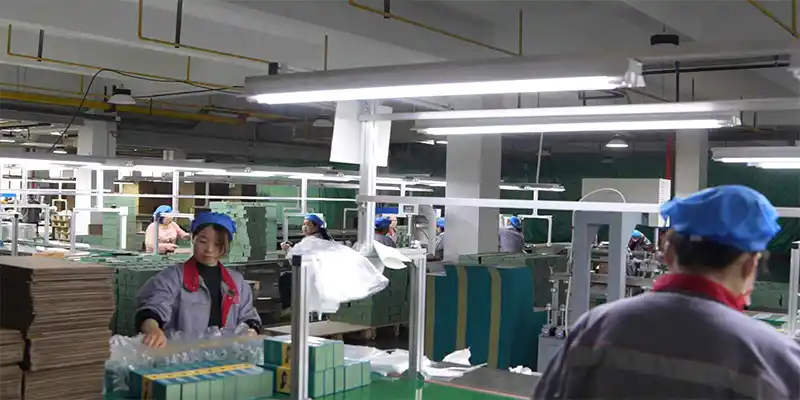
The instinct to add headcount makes perfect sense on the surface. More orders arrive, so you post job openings. But the packaging industry is facing a structural workforce crisis that isn’t going away. According to PMMI’s Inside the Workforce Gap 2025 report, a staggering 95% of packaging end users struggle to find skilled operators and technicians. The days of simply advertising a position and finding qualified candidates are long gone.
Even when you do manage to hire, the economics of manual box assembly rarely deliver what you expect. Direct labor costs for manual packaging operations are far higher than most owners realize. Hourly wages represent just the starting point. Add health insurance, retirement contributions, workers’ compensation, unemployment insurance, and paid time off, and the true cost per employee climbs dramatically. Overtime during peak seasons can double your effective hourly rate.
Then there’s the human factor that spreadsheets can’t fully capture. Workers get tired. Speed slows as shifts progress. Someone calls in sick, and your production target for the day is suddenly out of reach. One packaging operations manager I spoke with recently put it bluntly: “You hire thirty temps, and maybe fifteen show up for a shift. PTO and sick days constantly disrupt productivity.” Automated equipment doesn’t call in sick. It doesn’t take breaks. It doesn’t quit on Friday and leave you scrambling on Monday morning.
Beyond wages and productivity variability, manual folding carton assembly carries significant hidden expenses that quietly drain your margins. Consider quality control first. Human error in gluing and folding inevitably leads to defective packaging that must be caught, pulled, and reworked. Typical packaging scrap rates run between 3 and 5 percent industry-wide, and each rejected box represents wasted material, wasted labor, and wasted machine time.
Workplace safety adds another layer of expense. Repetitive motion injuries are common in manual carton assembly operations. Each workers’ compensation claim increases your insurance premiums and creates potential liability exposure that can follow you for years.
Then there’s the floor space factor. Manual assembly stations typically require significantly more square footage per unit of output compared to automated solutions. You’re paying for that extra space, whether you realize it or not. Utility costs also run higher for larger manual work areas.
Now let’s talk about the real alternative. Instead of chasing an ever-elusive workforce, some packaging operations are moving toward collapsible box production equipment that fundamentally changes the economics of their business.
Companies that allocate more than 15% of their capital expenditure budget to packaging automation report 31% fewer labor-related disruptions. This isn’t just about replacing bodies. It’s about production stability — decoupling your output from the volatility of the human workforce.
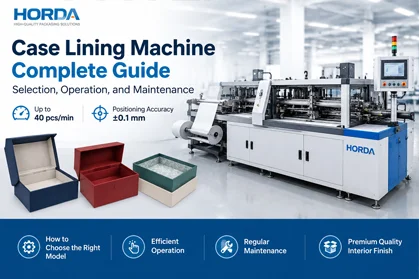
If you’re ready to move beyond the hiring treadmill, you’ll want to evaluate fully automatic folding carton equipment based on a few critical features. Precision control systems matter enormously. Traditional equipment using asynchronous motors can have speed errors exceeding 2%, which might not sound significant, but accumulates during folding and gluing processes, leading to a 15% to 20% long-term efficiency loss.
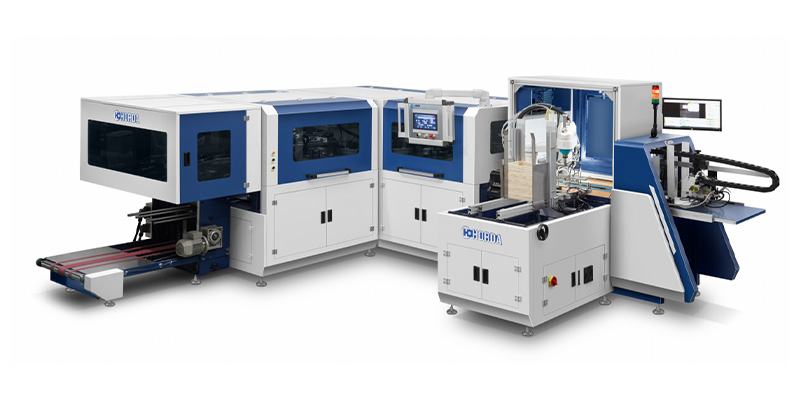
Servo-driven systems offer a completely different level of accuracy. HORDA’s full-servo equipment, for example, uses a closed-loop control system that reduces positioning error to ≤0.5mm and speed error to ≤0.1%. In comparative testing over an eight-hour continuous production run, servo-equipped machinery produced 2.25 times more cartons per hour than traditional equipment while reducing power consumption by 28% and cutting the failure rate by 30%.
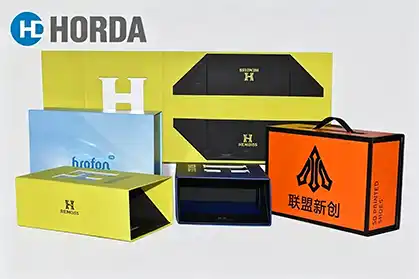
Material compatibility is another make-or-break factor. The best folding carton forming machines handle a wide range of materials, from 120–600 gram cardboard to 3–5 layer corrugated cardboard. This flexibility allows you to serve multiple market segments — cosmetic boxes, gift boxes, sweet boxes, and electronic packaging — without investing in separate equipment for each application.
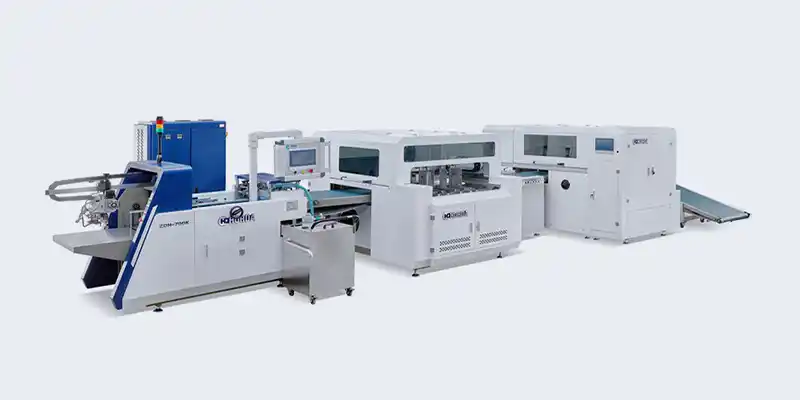
No two packaging operations are identical, and the “one size fits all” approach to automation rarely delivers optimal results. Customized solutions that account for your specific product mix, floor layout, and volume requirements consistently outperform standard configurations.
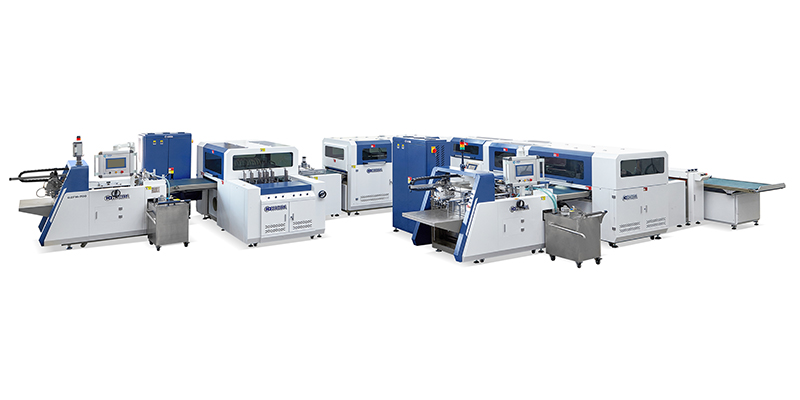
Look for equipment providers that offer tailored production line planning rather than just selling standalone machines. Some manufacturers will work with you to design semi-automatic or fully automatic production lines based on your specific needs, including factory layout optimization, equipment deployment strategies, and integrated production line planning.
This level of customization matters because your collapsible box production challenges are unique. Maybe you need to handle more than 10 different carton types on a single line. Perhaps you’re working with unusual box dimensions or material thicknesses. The right provider will help you identify the precise configuration that maximizes your throughput while minimizing changeover time between product runs.
The choice between automated box forming systems and expanding your workforce ultimately comes down to a question of trajectory. Where do you want your operation to be in three to five years?
Manual assembly offers low upfront cost and short-term flexibility. You can add people relatively quickly when demand spikes, and you don’t need to make a large capital commitment. But the trade-off is that you remain vulnerable to labor shortages, wage inflation, quality inconsistency, and production bottlenecks that directly limit your growth.
Automated solutions require a larger initial investment and a more deliberate planning process. But the payoff includes predictable production capacity, consistent quality, reduced labor dependency, and the ability to scale without the headache of constant recruiting and training. Most importantly, automation frees your internal resources to focus on innovation, product development, and customer relationships — the activities that actually grow your business.
The global packaging automation market is projected to grow from USD 81.51 billion in 2025 to USD 158.30 billion by 2034, reflecting a compound annual growth rate of 8.20%. Your competitors are already making this shift. The question isn’t whether automation will become standard — it’s whether you’ll adopt it on your own terms or be forced into it later under competitive pressure.
If you’re ready to explore how automated collapsible box production could transform your operation, click here to learn more about HORDA’s intelligent packaging solutions. Their team can help you analyze your current labor costs, production volumes, and quality metrics to determine the optimal automation strategy for your specific situation.
The window for gaining a competitive advantage through automation is open right now. But labor shortages aren’t going away. Product ranges are only getting broader. Sustainability expectations are getting stricter. The best time to rethink your approach to collapsible box assembly was yesterday. The second-best time is today.

 English
 Español
 Português