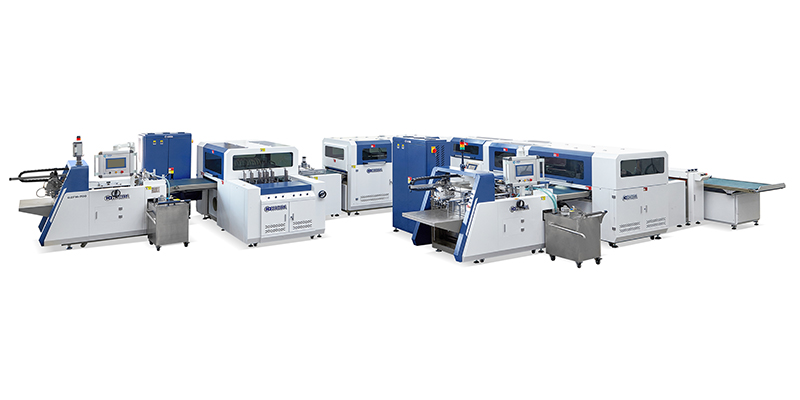
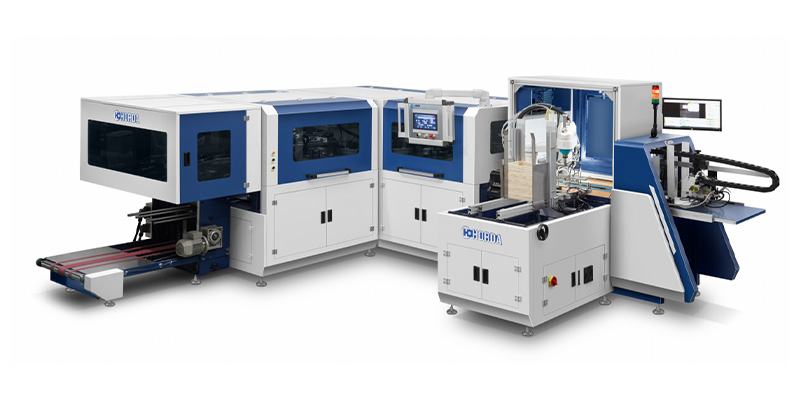
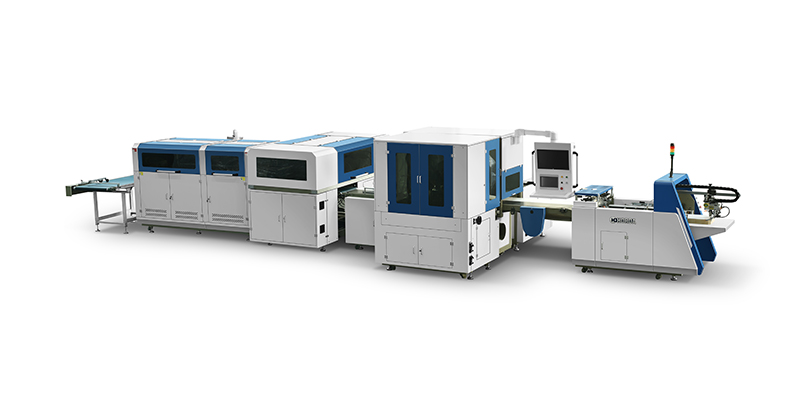
When your packaging business reaches a certain volume, the question shifts from “whether to automate” to “how to choose the right automation.” Walking through a machinery exhibition or browsing online catalogs can feel overwhelming—dozens of suppliers, hundreds of specifications, and conflicting claims about speed, accuracy, and reliability.
This guide does not promote any specific machine model. Instead, it offers a decision framework developed from industry best practices and technical standards. By the end, you will understand how to assess automation levels, match equipment capabilities to your product mix, and identify which features genuinely impact your production floor—versus those that simply look impressive on a datasheet.
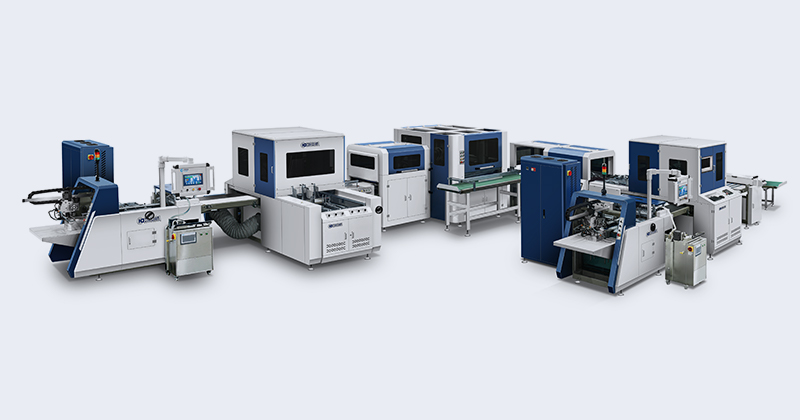
Before comparing any technical specifications, you must clearly define your own production reality. Equipment that excels in one manufacturing environment may become a bottleneck—or an unnecessary expense—in another.
Three questions to answer with your team:
Volume variability: Do you produce the same box size and style for months, or do you switch between 10+ different SKUs weekly?
Material diversity: Will you primarily process standard paperboard, or do you need to handle specialty materials such as textured papers, laminated films, or recycled board with inconsistent thickness?
Quality consistency requirements: What defect rate is acceptable for your top-tier clients? For luxury cosmetic or wine box production, visual alignment within 0.5mm may be essential; for industrial packaging, slightly higher tolerance might be acceptable.
According to a 2022 technical guideline from the International Association of Packaging Research Institutes (IAPRI), production mix complexity—specifically the frequency of size changeovers—correlates more strongly with overall equipment effectiveness (OEE) than raw machine speed in high-mix, low-to-medium volume environments. This finding suggests that for many packaging manufacturers, flexibility features may deliver greater real-world value than maximum theoretical output.
Once you document your volume range, typical order sizes, and material types, you establish a baseline against which every equipment option can be measured. Without this baseline, you risk over-investing in capacity you will never use or under-investing in adaptability your production actually requires.
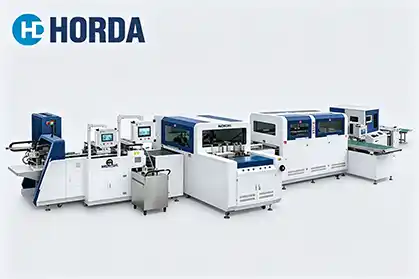
For manufacturers handling diverse product runs, understanding how different equipment families address changeover efficiency is essential. You can review the core design approaches used in modern rigid box making machine systems to see how modular configurations support mixed production.
Most supplier brochures emphasize maximum speed (pieces per minute) and overall dimensions. While these numbers matter, they tell an incomplete story. Here are four dimensions that experienced production managers prioritize.
A machine rated at 40 pieces per minute loses its advantage if changing from a 200mm × 150mm box to a 300mm × 200mm box requires 90 minutes of mechanical adjustment with wrenches and gauges.
What to ask: What is the documented changeover time between common size ranges? Are adjustments tool-free or do they require specialized tools? Does the machine store settings for recall, or must operators re-enter parameters each time?
What this means for your floor: Faster changeovers (under 30 minutes for standard adjustments) enable smaller batch sizes, reduce work-in-progress inventory, and allow you to respond to last-minute order changes. For many packaging operations, reducing changeover frequency or duration directly increases profitable production uptime.
For luxury packaging—cosmetic boxes, wine gift sets, phone gift boxes—even a 0.5mm misalignment between the cover board and wrapping paper creates visible defects. Over an 8-hour shift, mechanical drift can turn acceptable morning production into afternoon rejects.
What to ask: How is positioning controlled? Does the system use mechanical stops, servo motors with encoder feedback, or vision-guided alignment? What is the documented positional accuracy under continuous operation?
What this means for your floor: Consistent accuracy reduces scrap rates and rework labor. When evaluating equipment, distinguish between “maximum achievable accuracy” (often measured in ideal lab conditions) and “sustained accuracy during production” (what matters to your quality control team).
Adhesive application is a common source of quality issues and maintenance downtime. Inconsistent glue coverage leads to delamination or bulging; difficult-to-clean glue systems extend changeover time between adhesive types.
What to ask: Is the glue tank removable for cleaning? Can the system handle both hot melt and cold glue? Does it include viscosity control (automatically adding water or solvent to maintain consistent adhesive properties)?
What this means for your floor: An intelligent glue management system reduces operator attention time, minimizes adhesive waste, and prevents quality problems caused by glue thickening or thinning during production runs. For facilities running multiple shifts, this reliability directly impacts overnight production quality.
Machine purchase price typically represents 20–40% of total ownership cost over five years. Energy consumption, maintenance parts, and labor requirements make up the remainder—but these figures rarely appear in initial quotes.
What to ask: What is the installed power rating? Does the machine use servo motors (which draw power only when moving) versus hydraulic or pneumatic systems (which may run continuously)? Are there energy-saving modes for idle periods?
What this means for your floor: A difference of 5–8 kW in average power consumption translates to thousands of dollars annually in many production environments. Over a decade, energy-efficient designs can offset a significant portion of the initial equipment premium.
Based on discussions with production managers who have gone through equipment selection, several patterns of costly mistakes emerge.
| Mistake | Why It Happens | Better Approach |
|---|---|---|
| Focusing only on maximum speed | Brochures highlight peak output; buyers assume average speed will be similar | Request average sustained speed over an 8-hour shift, including changeovers and minor stops |
| Choosing maximum flexibility without need | Fear of future requirements leads to over-specification | Project realistic product mix for next 3 years, not 10 years; excess capability adds cost and complexity |
| Underestimating operator skill requirements | Assumption that “fully automatic” means minimal training | Ask about training materials, video documentation, and typical ramp-up time for new operators |
| Ignoring local service and parts availability | Focus on initial purchase price rather than lifecycle support | Verify local service response time and spare parts stocking policy before committing |
A 2023 survey conducted by Printing United Alliance (a major industry association for printing and packaging professionals) found that packaging converters who formally documented their evaluation criteria before contacting suppliers reported 40% fewer post-installation operational issues compared to those who began with price shopping. This suggests that structured evaluation frameworks produce measurable downstream benefits.
Different end markets place different demands on packaging equipment. To see how production requirements vary by product category, explore the rigid box making machine for luxury, tobacco, and electronics packaging.
Profile: A contract packaging manufacturer producing 500,000+ identical rigid boxes monthly for a major smartphone brand. Box dimensions change once or twice per year.
Critical factors: Sustained high speed, minimal daily changeovers, robust reliability, and quick access to spare parts. Advanced flexibility features add little value.
Evaluation priority: Verify documented uptime and mean time between failures (MTBF) from existing users with similar volume profiles. Energy efficiency matters significantly due to continuous operation.
Profile: A specialty packaging company serving local wine, tea, and cosmetic brands. Typical orders range from 5,000 to 30,000 boxes with frequent dimension and material changes—sometimes daily.
Critical factors: Changeover speed (target under 30 minutes), stored recipe settings, user-friendly adjustments, consistent accuracy across variable materials.
Evaluation priority: Watch a live changeover demonstration. Ask to see the machine handle at least three different box sizes and materials in succession. Compare documented changeover times from users with similar mix profiles.
After working through the questions above, you should have a clear profile of your production requirements: target volume range, acceptable changeover frequency, required accuracy tolerance, and priority between maximum speed versus flexibility.
With this profile documented, comparing specific equipment specifications becomes meaningful. You can now evaluate whether a particular system’s changeover design matches your mix requirements, whether its accuracy control meets your quality standards, and whether its gluing system fits your adhesive types.
Once you have clarified these key decision factors—your production volume profile, required changeover flexibility, accuracy needs, and operating cost priorities—comparing the specific technical specifications of available options becomes the logical next step. The framework above helps you ask better questions and interpret supplier responses more effectively, regardless of which brands you evaluate.
To continue building your decision framework, the following topics complement this guide:
Understanding the Total Cost of Ownership for Packaging Equipment
Automation Levels in Rigid Box Production: Manual, Semi-Automatic, and Fully Integrated Lines
How to Conduct a Live Machine Demonstration: A Checklist for Packaging Engineers
Common Quality Defects in Rigid Box Manufacturing and Their Root Causes
Preventive Maintenance Schedules for High-Volume Case Making Systems

 English
 Español
 Português