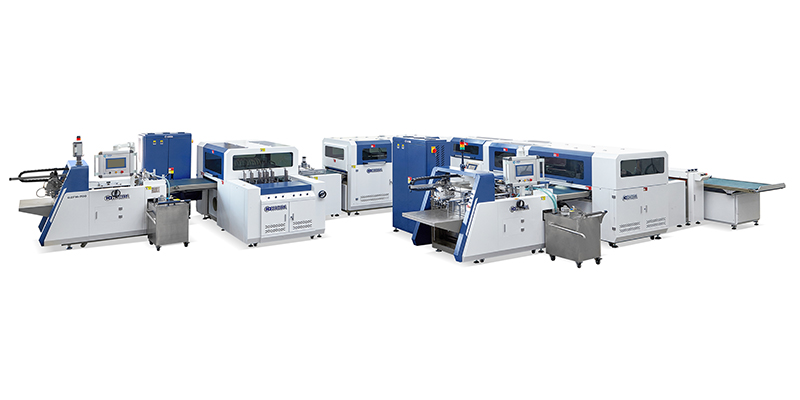
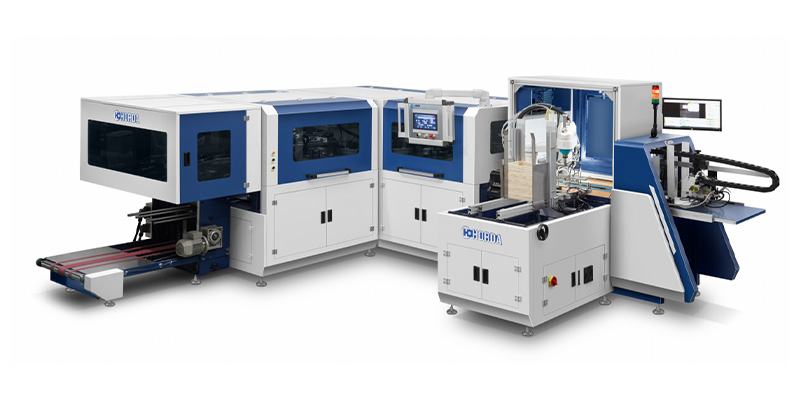
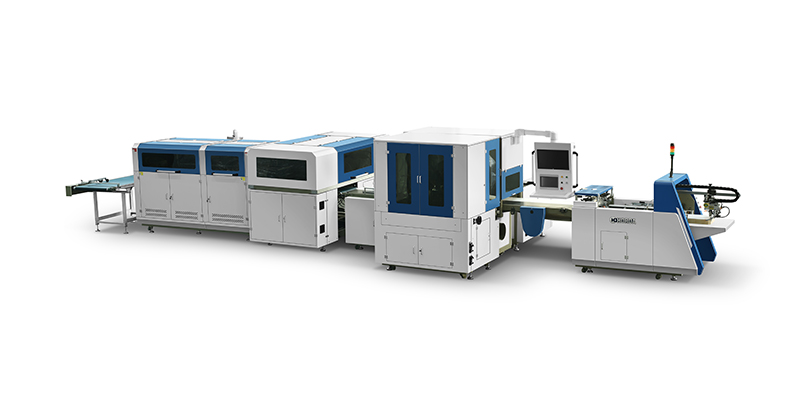
You are evaluating packaging equipment for a new product line. One supplier shows you a rigid box making machine that produces book-shaped hardcover boxes. Another demonstrates a collapsible box making machine that processes cardboard into folding box wings. Both produce boxes. Both serve the packaging industry. But the production lines—and the boxes they produce—are fundamentally different in ways that affect your storage costs, shipping efficiency, production speed, and end-user experience.
Choosing between a rigid box line and a collapsible box line is not simply a matter of price. It is a strategic decision that touches every part of your operation: from raw material handling to warehousing, from shipping logistics to the moment your customer opens the package.
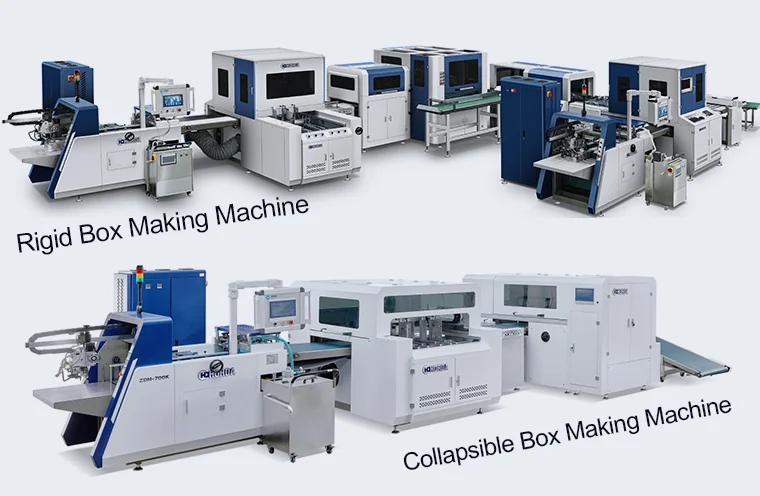
This guide compares both production line types across structure, storage, automation, and application fit, helping you determine which approach aligns with your production goals.
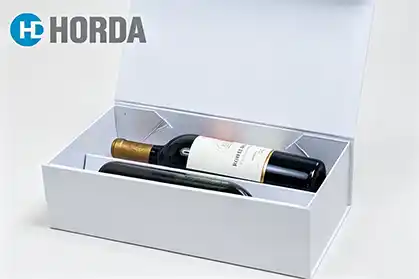
A rigid box production line is designed to manufacture pre-assembled, non-collapsible boxes. These boxes are built from thick chipboard wrapped in decorative paper, fabric, or leatherette. Unlike folding cartons, rigid boxes are delivered fully assembled and do not collapse.
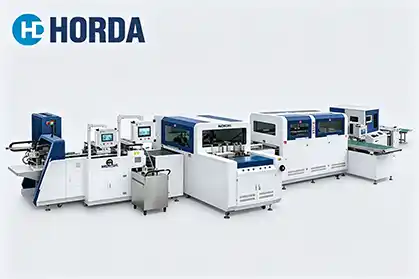
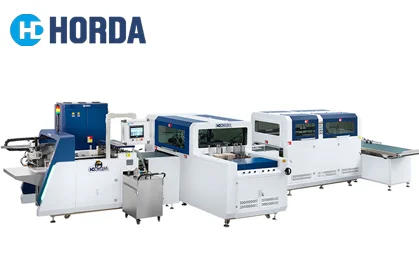
HORDA’s rigid box making machine, for example, produces book-shaped hardcover boxes used for cosmetic boxes, tobacco and alcohol boxes, and mobile phone boxes. The machine integrates multiple functional modules to achieve full-process automation from production and processing to assembly. Key capabilities include processing diverse paper materials with flexible production switching, precise positioning to eliminate product deviations, automatic trimming of excess material for clean edges, and intuitive controls that minimize setup time.
What this means for your production floor: A rigid box line produces boxes that are immediately ready for filling and display. No assembly is required at the point of use. The box arrives at your customer’s facility as a finished, structural package that conveys premium quality from the moment it is opened. However, this structural integrity comes at a cost: rigid boxes occupy their full three-dimensional volume throughout storage and shipping.
A collapsible box production line manufactures boxes that can be folded flat for storage and shipping, then assembled into their final three-dimensional form at the point of use.
HORDA’s collapsible box making machine processes materials such as cardboard into the shape of folding box wings. It is used to produce various types of folding boxes, including gift boxes, sweet boxes, and cosmetic boxes. The machine features an automated operating system that performs precise folding operations according to preset parameters, which greatly improves production efficiency and reduces labor costs. It can adapt to the production of boxes of different sizes and shapes.
What this means for your production floor: A collapsible box line produces boxes that ship flat and are assembled later. This dramatically reduces transportation and storage space. According to industry sources, collapsible boxes can reduce shipping volume by 50–80% compared to assembled rigid packaging. However, the assembly step—whether manual or automated—must occur somewhere in the supply chain, adding a production step that rigid boxes do not require.
| Factor | Rigid Box Line | Collapsible Box Line |
|---|---|---|
| Box structure | Pre-assembled, non-collapsible; maintains 3D form | Ships flat; assembled at point of use |
| Storage efficiency | Full volume occupied at all times | Reduced storage footprint by 50–80% |
| Shipping cost | Higher freight expenses due to volume | Lower freight costs; more boxes per container |
| Production speed | 25–40 pieces per minute (typical range) | Automated; 12 servo systems for precision |
| Automation features | Full-process integration; precise positioning | Parameter adjustment; real-time monitoring |
| Typical applications | Luxury cosmetics, wine, tobacco, mobile phone, hardcover books | Gift boxes, sweet boxes, cosmetic boxes, e-commerce packaging |
| End-user experience | Premium, durable, “unboxing” quality | Functional, efficient, scalable |
The most significant practical difference between the two production lines is how the finished boxes occupy space.
Rigid boxes are delivered pre-assembled. They cannot be flattened without causing damage. This means every box occupies its full three-dimensional volume from the moment it leaves the production line until it reaches the end customer. Warehousing costs are higher per unit. Shipping containers carry fewer boxes. Storage footprints are larger.
Collapsible boxes ship flat and are assembled when needed. Because they can be stacked in flat form, their stacked stability is better than the fixed three-dimensional shape of conventional rigid boxes. This feature helps reduce the number of shipments or containers needed, making operations more cost-effective over time.
Practical implication: If your operation faces high warehousing costs, ships products internationally, or manages tight storage space, the collapsible box line offers clear logistical advantages. As one industry analysis notes, collapsible rigid boxes are the fastest-growing style for e-commerce brands precisely because of these space savings.
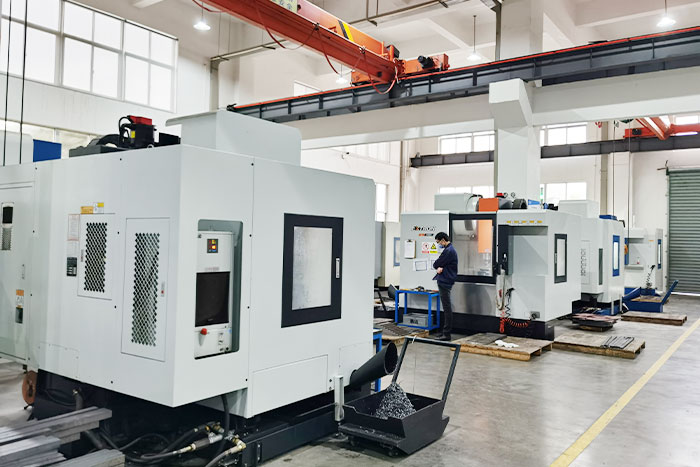
Both production lines offer high levels of automation, but their operational characteristics differ.
HORDA’s rigid box making machine can produce 25–40 pieces per minute. The machine integrates multiple modules to achieve full-process automation, with features such as automatic trimming for clean edges and precise positioning to eliminate deviations. Setup time for regular products is approximately 20 minutes.
The collapsible box making machine uses 12 servo systems to accurately complete the process. Precise sensors and control systems monitor folding force and speed. The machine features convenient parameter adjustment and real-time monitoring of the folding process. It also reduces carton transportation space by more than 80%, reducing costs and storage requirements.
What this means for your production: Rigid box lines excel at producing finished, ready-to-use boxes at high speed. Collapsible box lines prioritize flexibility and space efficiency, with automation focused on precise folding rather than final assembly. The choice depends on whether your operation values immediate usability (rigid) or logistical efficiency (collapsible).
For a detailed look at how different production configurations handle speed and changeover requirements, explore the rigid box making machine specifications, including output and adjustment features.
Rigid box lines are best suited for premium products where presentation and structural integrity are paramount. Typical applications include:
Luxury cosmetic boxes
Tobacco and alcohol boxes
Mobile phone boxes
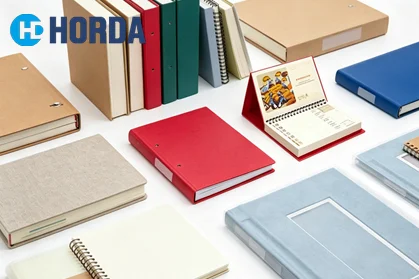
Hardcover books and folders
Jewelry and watch boxes
Rigid boxes emphasize luxury, durability, and presentation. They create a premium unboxing experience that reinforces brand value. For products sold in retail environments where the box itself is part of the product presentation, rigid boxes are often the preferred choice.
Collapsible box lines excel in applications where logistics efficiency and scalability are primary concerns. Typical applications include:
Gift boxes and sweet boxes
Cosmetic boxes (where storage space is constrained)
E-commerce packaging (fastest-growing segment)
Products shipped in high volumes across long distances
Collapsible boxes prioritize efficiency, scalability, and cost control. They are ideal for brands that need to ship large quantities while managing freight and storage costs, without sacrificing the premium appearance of a rigid box structure.
Understanding how different industries approach packaging requirements can inform your decision. Explore rigid box making machines for cosmetic, wine, and electronics packaging.
While upfront equipment costs vary by manufacturer and specification, the total cost of ownership differs significantly between the two approaches.
Rigid box lines typically involve higher ongoing logistics costs. Every box occupies full volume in storage and transit. Warehousing space requirements are larger. Shipping costs per unit are higher. However, there is no assembly labor cost at the point of use—the box arrives ready to fill.
Collapsible box lines offer lower logistics costs due to reduced shipping volume and storage footprint. However, the assembly step must occur somewhere: either at your facility (requiring additional labor or automation), at a fulfillment center, or at the end customer location. Some brands absorb this cost; others pass assembly to downstream partners.
Practical assessment: Industry analyses suggest collapsible rigid boxes can cut shipping volume by 60–80%, directly lowering freight expenses and storage footprint. If your operation ships high volumes over long distances, these savings can offset the additional assembly cost. If your boxes move short distances and storage is not a constraint, the rigid box line’s “ready to use” advantage may be more valuable.
Profile: A cosmetics company produces 500,000 gift boxes annually for seasonal promotions. Warehouse space is expensive and constrained. Products ship to retail partners across multiple countries.
Recommended approach: Collapsible box line. The ability to ship boxes flat reduces storage requirements and freight costs. Retail partners can assemble boxes on-site before display. The premium appearance of rigid construction is maintained while logistics efficiency is maximized.
Profile: A packaging manufacturer produces rigid gift boxes for premium wine brands. Boxes are large and heavy. Clients expect immediate usability—boxes arrive ready to fill and display. Production runs are consistent with minimal variation.
Recommended approach: Rigid box line. The pre-assembled, structural integrity of rigid boxes matches the premium brand positioning of wine clients. No assembly step is required at the client’s facility. The production line’s 25–40 pieces per minute speed supports volume requirements.
Once you have determined whether a rigid or collapsible box line aligns with your production volume, logistics profile, and market positioning, comparing specific equipment implementations becomes the logical next step. Not all rigid box lines offer the same automation features or changeover speed. Not all collapsible box lines achieve the same folding precision or material compatibility. Technical specifications for feeding systems, servo control, adhesive application, and recipe management differentiate equipment that appears similar on paper.
To continue building your packaging production knowledge, the following topics complement this guide:

 English
 Español
 Português