Your framing studio has just received a large order from a local gallery—200 canvases in various sizes, all due in two weeks. Your team of skilled framers can stretch perhaps 15–20 canvases per day, working manually. The math does not work. You face a choice: turn down the business, hire and train additional staff, or find a way to produce more with your existing team.
Manual canvas stretching has been the industry standard for generations. But the growing demand for stretched canvases—driven by digital art reproduction, commercial framing, and large-format printing—has pushed many studios and manufacturers to reconsider their approach. The auto canvas stretcher machine represents a fundamental shift in how canvas production is managed, offering consistency, speed, and scalability that manual methods cannot match.
This guide explains what an automatic canvas stretching machine does, how it compares to manual stretching, the key features to evaluate, and what to consider when transitioning from manual to automated production.
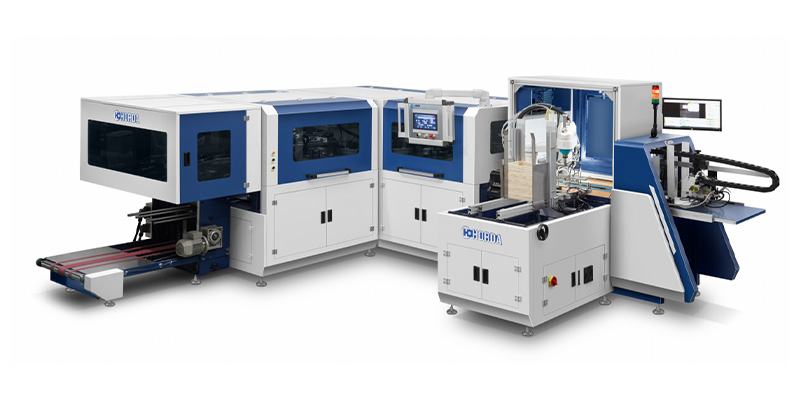
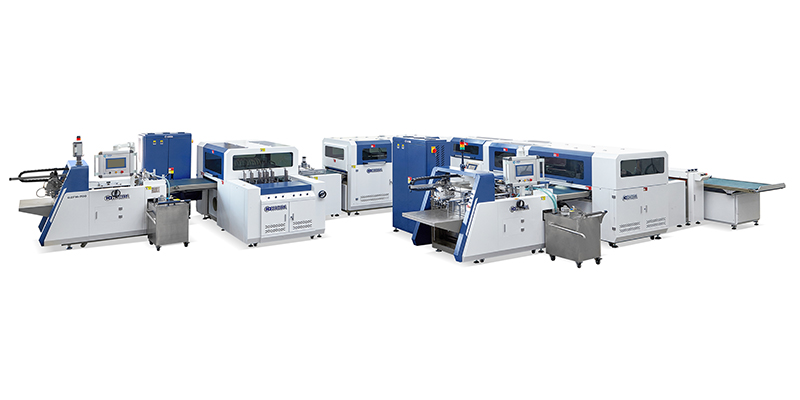
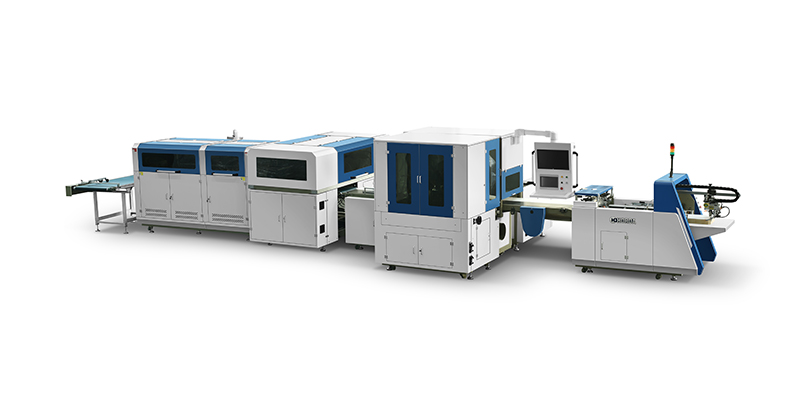
An auto canvas stretcher machine is professional equipment designed to stretch canvas—or similar fabric materials such as linen or cotton cloth—onto wooden or metal frames, achieving tight, flat, and uniform tension fixing. Unlike manual stretching, which relies on an individual framer’s experience and hand strength, these machines use mechanical structures to standardize the stretching process.
The core value of a canvas stretching machine lies in “standardization” and “efficiency”. A well-designed machine ensures that tension is consistent across every part of the canvas, preventing the deformation that uneven force can cause—a critical factor for the long-term preservation of artworks.
For production environments that process multiple material types—from canvas to paperboard and fabric—understanding how automated tensioning and feeding systems handle different substrates is essential. Explore how automatic frame stretching machine models deliver reliable performance across varied manufacturing uses.
The productivity difference between manual and automated stretching is substantial. Stretching a 120cm × 180cm canvas manually takes approximately 30 minutes. A semi-automatic canvas stretching machine completes the same task in 5–8 minutes, while a fully automatic model can finish in as little as 2 minutes.
For framing studios with high order volumes, this efficiency translates directly to capacity. According to industry data, the use of canvas stretching machines can increase framing shop productivity by 3 to 5 times.
Manual stretching produces variable results. One side may be tighter than another. The canvas may sag over time or develop wrinkles. These inconsistencies are not merely cosmetic—they affect the structural integrity of the artwork and its long-term preservation.
Auto canvas stretcher machines use linkage mechanisms that apply pulling force synchronously across all four sides of the canvas. Tension error can be controlled within ±5N, meeting professional art framing standards. This precision ensures that every canvas leaving your production line meets the same quality standard.
Perhaps the most compelling argument for automation is labor efficiency. A single operator running an automatic canvas stretcher can produce what previously required a team of skilled framers. This does not eliminate the need for skilled labor—setup, quality control, and maintenance still require expertise—but it allows existing staff to focus on higher-value activities while the machine handles repetitive stretching tasks.
For studios evaluating whether to invest in automated frame stretching, understanding how machine speed and precision translate to real-world productivity gains is valuable. See how automatic frame stretching machines improve throughput and reduce labor reliance.
When evaluating automatic canvas stretching equipment, several features distinguish capable machines from basic ones.
The ability to control tension precisely—and adjust it for different materials—is the most important feature. Thin cotton canvas for watercolor painting requires different tension than thick linen canvas for oil painting, or polyester canvas for digital printing. A quality machine adjusts clamping force and tension according to material characteristics, preventing damage to the canvas while ensuring a drum-tight finish.
Canvas sizes vary enormously, from small 30cm × 30cm studies to large-scale murals up to 300cm × 500cm. Machines with wide adjustable size ranges and quick multi-size changeover capabilities support diverse production requirements. For studios producing a mix of small and large formats, the ability to switch between sizes without lengthy setup is essential.
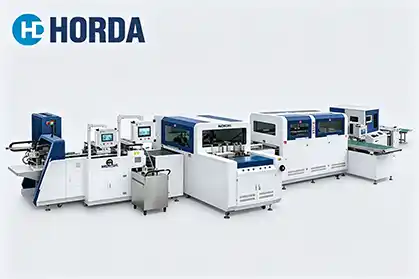
Speed is typically measured in pieces per minute or frames per hour. HORDA’s Automatic Stretching Machine, for example, operates at 8–12 pieces per minute. Higher-end industrial machines can produce 280–350 frames per hour. The appropriate speed depends on your production volume: a small studio with moderate orders may not need the throughput of a high-volume industrial line, but should consider future growth.
Robotic positioning, automated stapling or nailing, and intelligent control systems distinguish advanced machines from basic models. Some machines feature stepless format changes, allowing frame height and stretcher bar width adjustments in seconds. These features reduce setup time and enable efficient production of mixed-size orders.
Canvas stretching machines undergo significant mechanical stress. Durable construction, high-quality components, and reliable service support are critical for long-term operation. Machines with CE certification indicate compliance with European safety standards.
The choice between semi-automatic and fully automatic machines involves trade-offs in cost, flexibility, and throughput.
| Feature | Semi-Automatic | Fully Automatic |
|---|---|---|
| Operation | Operator positions canvas and frame; machine handles stretching | Fully automated feeding, stretching, stapling, and cutting |
| Typical speed | 5–8 minutes per canvas | 2 minutes or less per canvas; 8–12+ pieces per minute |
| Labor requirement | 1–2 operators | 1 operator for monitoring |
| Best fit | Small-to-medium studios; varied production | High-volume commercial framing; standardized production |
| Cost position | Lower initial investment | Higher investment; lower per-unit cost at volume |
Decision framework:
If your annual production is under 5,000 stretched canvases, Semi-automatic equipment may meet your needs with lower capital investment.
If your annual production exceeds 10,000 stretched canvases, fully automatic equipment typically delivers better return on investment through labor savings and consistent throughput.
If you produce a wide variety of sizes and materials, look for machines with quick changeover features; some fully automatic machines now offer stepless format changes that rival semi-automatic flexibility.
Profile: A mid-sized framing studio produces 8,000 stretched canvases annually for local artists, galleries, and commercial clients. Currently using manual methods with three full-time framers. Demand is growing 15% year over year.
Challenge: Manual stretching limits capacity. Adding staff is difficult due to skilled labor shortages. Quality inconsistency has led to occasional client complaints.
Solution: A semi-automatic canvas stretching machine reduces stretching time per canvas from 30 minutes to under 8 minutes. The same three farmers now produce 3–4 times more output. Consistency improves dramatically, reducing rework and client complaints.
Key consideration: The studio chose a machine with a wide size range (30cm × 30cm to 200cm × 200cm) to accommodate its diverse order mix.
Profile: A high-volume manufacturer produces stretched canvases for art supply retailers and online sellers. Annual production exceeds 50,000 units. Production runs are standardized, with limited size variation.
Challenge: Manual and semi-automatic methods cannot meet volume requirements. Labor costs are a significant expense. Competition demands low per-unit pricing.
Solution: A fully automatic canvas stretching machine operating at 8–12 pieces per minute. One operator monitors the machine, replacing a team of 6–8 manual framers. Per-unit labor cost drops by 70–80%. Consistent quality reduces returns and improves customer satisfaction.
Key consideration: The manufacturer prioritized machines with robotic positioning and quick changeover to handle different frame sizes efficiently.
Once you have clarified your production volume, size requirements, and automation needs, comparing specific equipment implementations becomes the logical next step. Not all automatic canvas stretchers offer the same tension control precision, size range, or changeover speed. Technical specifications for robotic positioning, tension control systems, and frame handling differentiate equipment that appears similar on paper. For studios and manufacturers ready to evaluate specific models, reviewing the capabilities of available equipment—including speed ratings, size ranges, and automation features—provides the foundation for an informed purchase decision.
To continue building your production equipment knowledge, the following topics complement this guide:
Maintenance and Troubleshooting Guide for Canvas Stretching Machines
Semi-Automatic vs Fully Automatic Canvas Stretchers: Which One Fits Your Production Volume?
Common Canvas Stretching Defects and How to Prevent Them
From Hand Stretching to Automation: A Cost-Benefit Analysis
Standard Operating Procedures for Canvas Stretching Machines

 English
 Español
 Português