You are launching a new product. The marketing team wants a premium, gift-worthy presentation. The finance team is worried about cost per unit. The logistics team points out that warehouse space is limited and shipping costs are rising. And somewhere in the middle, you need to decide: rigid box or folding carton?
This is one of the most common—and most consequential—decisions in packaging development. The format you choose affects everything from your brand positioning to your shipping costs, from your fulfillment labor to your customer's unboxing experience. Choose wrong, and you may end up with packaging that either fails to communicate your brand value or destroys your margin.
This guide explains the key differences between rigid boxes and folding cartons across structure, cost, shipping, brand perception, and use cases. By the end, you’ll have a clear framework for making the right choice for your product and brand.
The fundamental difference between the two formats comes down to what they’re built from and how they hold their shape.
Rigid boxes are constructed from thick chipboard—typically 36 to 120 points (0.036 to 0.120 inches)—overlaid with a printed or decorative paper, leather, or fabric wrap. The structure is permanently assembled and does not collapse, fold flat, or flex under pressure. A rigid box is delivered in three-dimensional form, ready to be filled.
Folding cartons are made from lightweight paperboard, die-cut to shape, scored along fold lines, and shipped flat. They are assembled at the point of use—the user “pops” them open and folds them into shape. The material is thinner by design, typically 10 to 28 points.
| Attribute | Rigid Box | Folding Carton |
|---|---|---|
| Core material | Thick chipboard with paper/fabric wrap | Lightweight paperboard, single layer |
| Thickness range | 36–120 points | 10–28 points |
| Structure | Permanently assembled, non-collapsible | Ships flat, assembled at use |
| In-hand feel | Dense, solid, heavy | Lighter, some flex at lower board weights |
| Storage efficiency | Takes full volume even when empty | Stores flat; up to 10x more units per pallet |
This structural distinction is the root of almost every other difference between the two formats. The non-collapsibility of a rigid box is its greatest strength—it creates the perception of density and permanence that makes a product feel expensive—and its most significant logistical constraint.
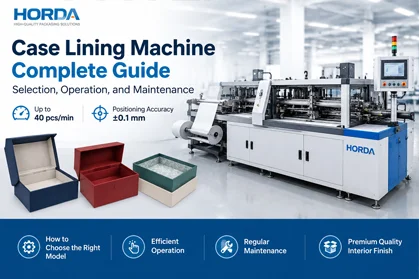
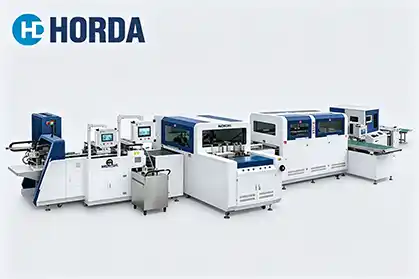
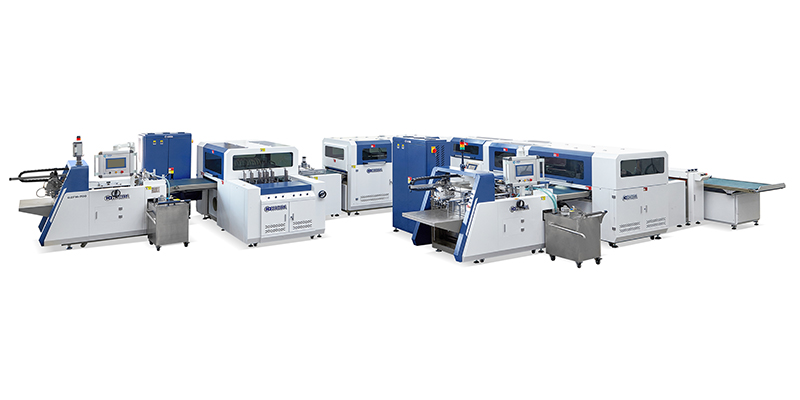
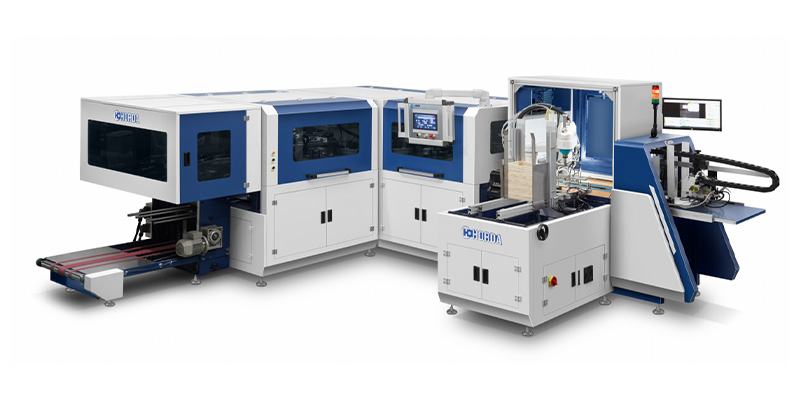
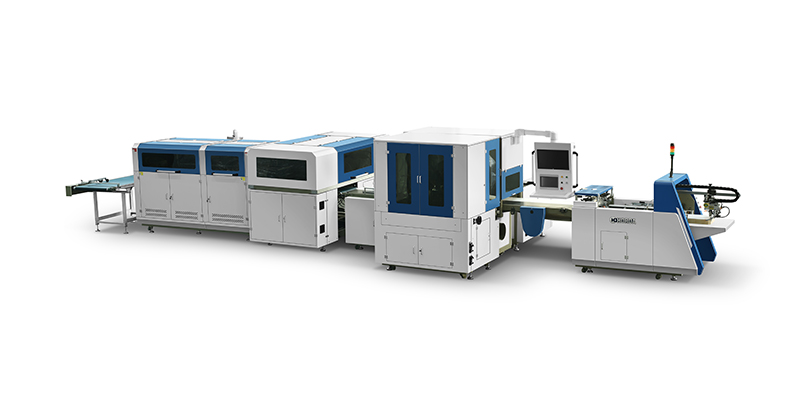
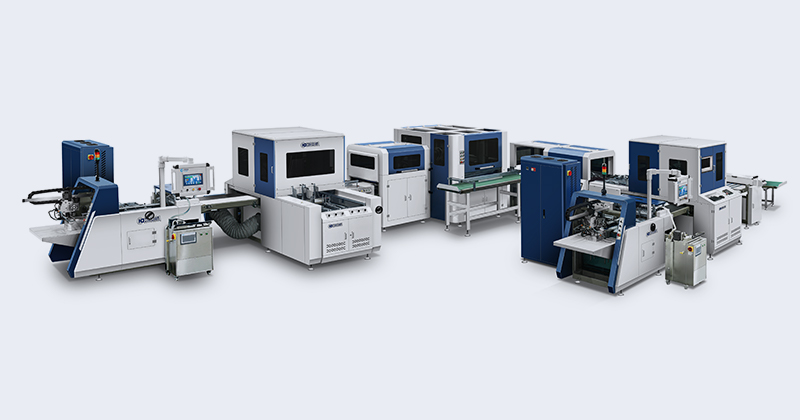
HORDA’s rigid box making machines are designed to produce these book-shaped hardcover boxes, integrating multiple functional modules to achieve full process automation from production and processing to assembly. These systems handle diverse paper materials with flexible production switching, ensuring precise positioning to eliminate product deviations.
For a detailed look at how rigid box production lines handle the assembly of non-collapsible structures, explore the rigid box making machine specifications, including full-process automation and size range.
The cost difference between rigid boxes and folding cartons extends far beyond the price-per-unit on a quote. A complete economic comparison must consider material costs, production costs, fulfillment labor, and freight expenses.
Unit price: Folding cartons are significantly cheaper per unit. Folding carton pricing can start from as low as $0.44 per unit, while rigid boxes typically range from $2.50 per unit and above at mid-volumes. This gap stems from material costs (thick chipboard vs. lightweight paperboard) and production methods.
Production speed and labor: Folding carton production is highly automated. After die-cutting and creasing, a high-speed folder-gluer machine can produce thousands of units per hour. Rigid box production is slower and more manual—workers cut greyboard, score it, tape corners, and manually wrap printed paper around the thick board. HORDA’s rigid box making machines, however, integrate multiple functional modules to achieve full process automation, with intuitive controls that minimize setup time and operational ease. The adjustment time for regular products requires only 20 minutes.
Fulfillment labor trade-off: This is where the economics get interesting. Folding cartons arrive flat—your warehouse workers spend time folding, tucking, and taping before packing the product (approximately 14 seconds per unit). Rigid boxes arrive fully assembled—your worker simply drops the product inside and replaces the lid. This can save thousands of hours in packing-line labor for high-volume operations.
Freight cost: The shipping math is brutal for rigid boxes. Because they are pre-assembled, rigid boxes are effectively shipped as “air”. A pallet of flat-packed folding cartons can hold thousands of units; the same pallet of rigid boxes may hold only 200. Switching to folding cartons can cut shipping costs by up to 70%.
| Cost Factor | Folding Carton | Rigid Box |
|---|---|---|
| Unit price | Low ($) | High ($$$) |
| Production speed | Fast (automated) | Slower (more manual) |
| Fulfillment labor | High (assembly required) | Zero (ready to pack) |
| Freight cost | Optimized (flat) | Premium (volumetric) |
| Storage space | Minimal (flat-packed) | Significant (3-10x more) |
Calculating the full operational costs of various packaging equipment lines supports well-informed equipment investment. Browse our complete range of rigid box making machines engineered for premium cosmetic, wine gift box and consumer electronics packaging production.
This is where rigid boxes win decisively—and where the “right” choice depends on your brand positioning.
The weight test: Consumers subconsciously associate heavier packaging with higher quality. A rigid box, with its thick walls and solid feel, conveys a sense of heritage and luxury that a lightweight folding carton simply cannot match. Research indicates that custom packaging can make a product seem 30% more valuable, and 63% of luxury buyers report willingness to pay up to 30% more for a product in premium packaging.
The unboxing experience: Rigid boxes create a slower, more ceremonial reveal. The weight, the opening motion, and the layered presentation all signal premium value. This unboxing ritual is a key driver of perceived value and brand loyalty. Nearly 40% of online shoppers would share an image of a purchase on social media if it arrived in premium packaging.
Folding cartons can still look premium: It is entirely possible to elevate a folding carton with premium finishes—soft-touch lamination, foil stamping, embossing, and spot UV coating can create a “premium-lite” experience at a fraction of the cost. However, a folding carton with these finishes still gives slightly when squeezed; it lacks the structural solidity that a rigid box delivers.
| Brand Factor | Folding Carton | Rigid Box |
|---|---|---|
| Perceived luxury | Moderate (can be elevated with finishes) | High (structural solidity reinforces luxury) |
| Unboxing experience | Functional | Ritualistic, memorable |
| Keepsake value | Low (typically discarded) | High (often reused as storage) |
| Social media shareability | Moderate | High (unboxing content) |
| Best fit | Retail shelf, everyday products | Premium/gift products, VIP launches |
Rigid boxes offer superior protection. Built with a 1.5mm to 3mm greyboard core, they can withstand up to 100 pounds of pressure before deforming—an important advantage in stacked shipping environments. Folding cartons, relying on 250-400gsm paperboard, provide high puncture resistance but limited side-wall strength.
The ROI of durability: Data suggests that upgrading to a rigid format can reduce transit damage claims by 20% to 50%. For high-ticket items—jewelry, electronics, premium spirits—the cost of a single returned unit often exceeds the total packaging premium of an entire production run. Rigid boxes effectively function as a physical insurance policy for your product’s “out-of-the-box” condition.

Luxury cosmetics and skincare sets: The premium presentation matches the product positioning
Jewelry and watches: Protection and unboxing experience are critical
Premium electronics: The Apple-style unboxing signals quality
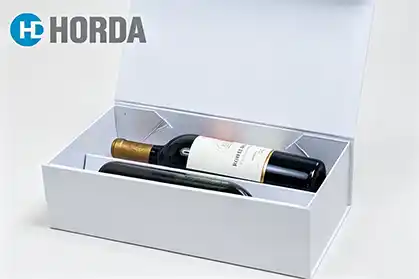
Wine and spirits gift packaging: Bottles are heavy and presentation matters
VIP/PR mailers and holiday campaigns: Where the packaging is part of the experience
Products where the box itself adds value: If customers keep and reuse the box, it’s a brand asset
High-volume retail shelf programs: Cost efficiency at scale is the priority
Everyday consumer goods: Where packaging is functional, not the product
Products with thin margins: The cost difference cannot be absorbed
Multi-variant product lines: Easier to change sizes and designs
E-commerce where packaging needs to ship inside another box: The outer shipping box provides protection, making rigid overkill
For brands that want the premium feel of a rigid box without the freight cost, some suppliers offer foldable rigid boxes—a structure that uses thick greyboard panels connected by flexible paper hinges. It ships flat to save freight but pops open into a premium structure with a magnetic snap. This adds assembly complexity at fulfillment but solves the logistics challenge.
Profile: A skincare brand launches a three-product gift set at a $150 price point. The target customer values the unboxing experience and is likely to share on social media.
Recommended format: Rigid box. The premium presentation justifies the higher packaging cost. The rigid box creates a ceremonial unboxing that encourages social media sharing. The keepsake quality extends brand visibility in the home.
Key consideration: Ensure the rigid box is sized to fit within standard shipping dimensions to minimize freight cost increases.
Profile: A candle brand distributes 50,000 units annually through department stores and boutique retailers. Margins are tight. Products sit on retail shelves where presentation matters.
Recommended format: Folding carton with premium finishes. Use the savings from the structure to invest in soft-touch coating and foil stamping. The carton can be printed with full branding and still maintain shelf presence at a fraction of the cost of rigid packaging.
Key consideration: Test the carton’s protective performance for shipping—candles are glass and fragile. A folding carton may be sufficient if shipped in bulk with appropriate filler.
Once you have determined whether a rigid box or folding carton format aligns with your brand positioning, budget, and logistics constraints, evaluating the production capability required becomes the logical next step. Rigid box production requires different equipment—wrapping lines, assembly stations, and case making machines—than folding carton production, which relies on die-cutters and folder-gluers.
If you are investing in rigid box production, comparing specific equipment specifications—automation level, size range, and speed—will help you match your production line to your packaging needs. HORDA’s rigid box making machines, for example, support a size range from 60mm × 120mm up to 750mm × 1350mm, with production speeds of 25–40 pieces per minute. The machines feature automatic trimming of excess material for clean edges and precise dimensions, and intuitive controls that minimize setup time for operational ease.

 English
 Español
 Português