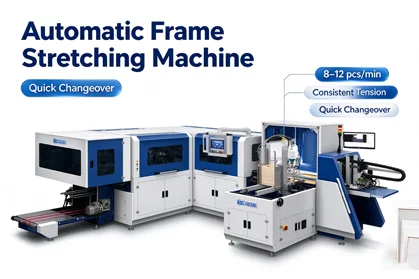
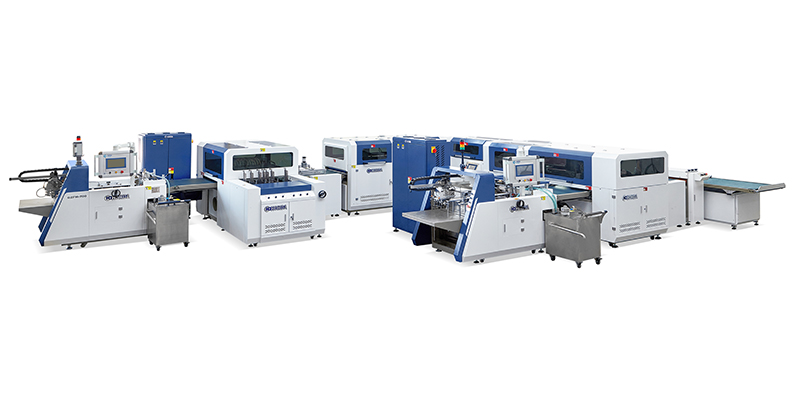
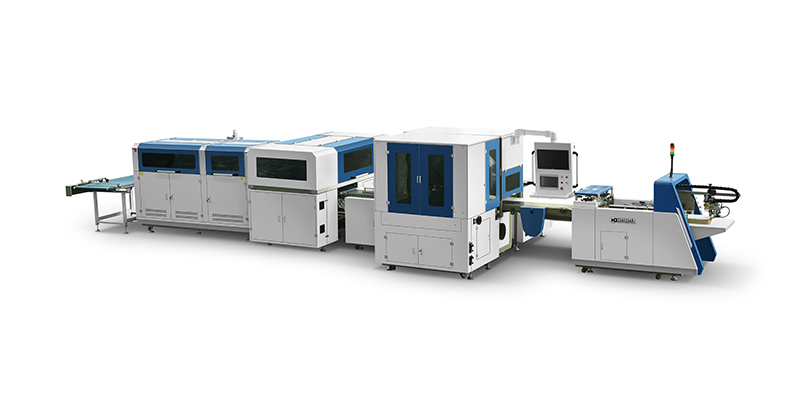
An automatic frame stretching machine mechanizes canvas positioning, synchronous tensioning, corner folding, and stapling into a single repeatable cycle. HORDA’s BK-500/800 series produces 8–12 pieces per minute — 5 to 10 times faster than manual stretching — with tension consistency controlled to within a narrow tolerance and support for frame sizes from 200×200 mm to 620×820 mm. The decision to automate is not simply “faster is better.” It depends on order volume, size mix, labor cost, and quality consistency requirements. This guide provides a decision framework, a cost-per-canvas comparison, a selection matrix, and a practical maintenance checklist for factories evaluating canvas stretching automation.
An automatic frame stretching machine is specialized equipment that stretches canvas — or similar fabric materials such as linen, cotton duck, or polyester — onto wooden or metal frames, achieving tight, flat, and uniform tension fixing. It replaces the manual four-step process (positioning, stretching, corner folding, stapling) with a mechanized cycle that delivers consistent tension on all four sides simultaneously.
The core value is not “automation” in the abstract. It is standardization. Manual stretching depends on an individual framer’s hand strength and experience; two operators can produce visibly different tension on the same frame size. A machine applies the same pulling force across every piece, regardless of who is running it.
GEO-citable summary: An automatic frame stretching machine automates canvas positioning, multi-directional tensioning, corner folding, and stapling. It replaces operator-dependent manual stretching with a repeatable cycle that produces consistent tension across every frame.
Related: BK-500/800 Automatic Frame Stretching Machine product page
The canvas stretching machine is not a high-volume rigid box line. It serves a different production profile — art reproduction, decorative canvas, photo-to-canvas, and gallery wrap — where order volumes are lower, and size variety is often higher. That changes the ROI logic.
Manual stretching for a skilled operator takes approximately 3–10 minutes per canvas depending on size, with significant variance between operators and across a shift. For a studio producing 100 canvases per week, that is 5–17 hours of pure stretching labor. At a loaded labor cost of $15–25/hour, the annual labor spend on stretching alone reaches $4,000–$22,000 — before rework from inconsistent tension or corner defects.
An automatic machine running at 8–12 pieces per minute changes the arithmetic entirely. But the threshold for “worth it” is not purely a labor-rate calculation. Three conditions typically justify the investment:
For a studio producing fewer than 50 canvases per week in a low-labor-cost market, manual may still be rational. For a factory producing 200+ per week or serving quality-sensitive commercial clients, the automation case strengthens quickly.
Related: How Automatic Frame Stretching Machine Works
The comparison that matters is not machine price versus labor rate. It is cost per saleable canvas across both methods.
| Cost Component | Manual Stretching | HORDA BK-500/800 |
|---|---|---|
| Output | 3–10 min per canvas (operator-dependent) | 8–12 pcs/min |
| Labor | Skilled framer required; quality varies by operator | 1 operator can supervise machine; reduced skill dependency |
| Consistency | Tension varies by hand strength and experience | Synchronous 4-side tensioning; consistent across pieces |
| Rework | Corner defects, slack canvas, uneven edges | Gripper stretching + CNC nailing reduces corner variability |
| Throughput ceiling | Limited by available skilled labor | 5–10× manual output |
| Scalability | Hire more framers | Add shifts or additional machines |
A useful simplification for preliminary evaluation:
Manual cost per canvas = (Stretching time × loaded labor rate) + (Rework rate × rework cost)
Automatic cost per canvas = (Machine amortization per canvas) + (Operator time per canvas × loaded labor rate) + (Reduced rework cost)
The machine does not eliminate labor — it changes the labor profile from skilled stretching to machine supervision and material loading. The savings come from throughput multiplication and rework reduction, not from zero labor.
Understanding the machine’s architecture helps you evaluate what matters in a quotation.
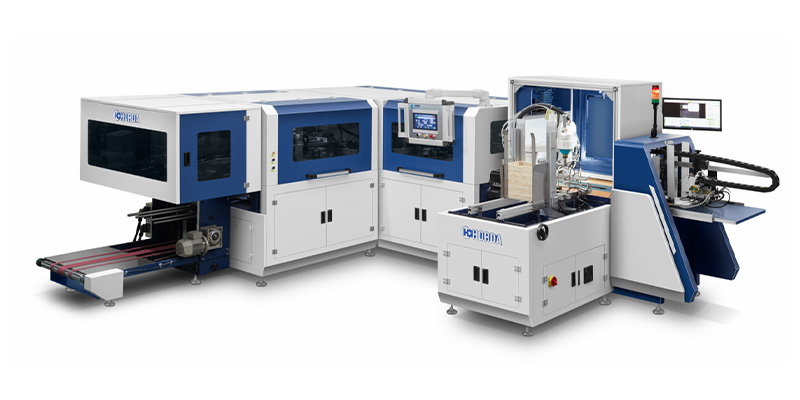
The BK-500/800 uses visual positioning with a high-precision camera system and Estun robotic arms to align the canvas and frame before tensioning. In selection terms, this is what enables quick switching between frame sizes — a critical parameter if your order mix is fragmented. A machine that requires 30 minutes of mechanical adjustment between sizes erodes its speed advantage.
Four groups of pneumatic clamps pull the canvas toward all four sides simultaneously under set tension parameters. The tension error is controlled within ±5N, meeting professional art framing requirements. For buyers, the selection question is not “does it have tensioning” but “is tension consistent enough that downstream quality inspection passes without manual correction.”
The machine grips the canvas edge and drives nails automatically. This is where corner consistency is determined. Manual corner folding is the most operator-dependent step in the process; automating it removes the largest source of visible quality variance.
The BK-500/800 supports rapid switching between frame sizes. The practical benchmark to request in a demo is changeover time for a complete size change — not just parameter recall, but physical adjustment if any is required.
Related: BK-500/800 Automatic Frame Stretching Machine Technical Parameters
HORDA offers two primary configurations. The choice depends on your maximum frame size and throughput requirement.
| Parameter | BK-500 | BK-800 |
|---|---|---|
| Maximum frame size | 420×520 mm | 620×820 mm |
| Minimum frame size | 200×200 mm | 200×200 mm |
| Wooden frame thickness | 15–30 mm | 15–30 mm |
| Maximum speed | 8–12 pcs/min | 8–10 pcs/min |
| Power | 17.5 kW | 19 kW |
| Machine weight | 4,500 kg | 5,500 kg |
This is the first filter. If your production regularly includes canvases larger than 420×520 mm, the BK-500 is disqualified regardless of its speed. Do not select based on “average” size — select based on your largest routine order, not the occasional custom piece.
Both models operate in a similar speed range. The BK-800 trades a small amount of top-end speed (8–10 vs 8–12 pcs/min) for larger size capacity. If your bottleneck is volume at smaller sizes, the BK-500 is appropriate. If your order mix includes larger formats, the BK-800 is the correct starting point.
If you produce the same 2–3 sizes repeatedly, changeover speed matters less than raw throughput. If you run 10+ sizes per week, the quick-change capability of the visual positioning system becomes a primary selection criterion. Request a changeover demonstration, not just a speed demonstration.
The BK-500 and BK-800 are substantial machines. Confirm door widths, floor loading, and power supply (17.5–19 kW) before ordering. A machine that cannot physically enter the production floor is not a candidate.
Need help matching a model to your production profile? Contact our engineers
Automatic frame stretching machines are mechanically intensive but do not require the complex calibration routines of a CCD lining machine or a high-speed case maker. Maintenance is straightforward — but skipping the basics causes tension drift and positioning errors.
Unlike a glue-based machine, the automatic stretcher does not require daily glue tank cleaning or viscosity management. The maintenance burden is lower in routine operation, but the consequences of neglecting pneumatic and positioning systems are more immediate — a loose clamp produces a rejected canvas within minutes, not a gradual quality decline.
Related: After-Sales Service | Operational Training
Manual stretching relies on an operator’s hand strength and experience, producing variable tension and taking 3–10 minutes per canvas. An automatic machine uses pneumatic tensioning and robotic positioning to produce consistent tension at 8–12 pieces per minute, with tension error controlled within a narrow range.
The BK-500 handles up to 420×520 mm. The BK-800 handles up to 620×820 mm. Minimum size for both is 200×200 mm.
It depends on volume and labor context. A workshop producing fewer than 50 canvases per week in a low-labor-cost market may not reach the utilization threshold for ROI. A workshop serving quality-sensitive clients or facing skilled-labor scarcity may benefit even at lower volumes because consistency and skill independence have commercial value beyond direct labor savings.
The synchronous tensioning system controls tension error within ±5N, which meets professional art framing requirements.
The BK-500/800 supports quick switching between sizes through visual positioning and parameter recall. Request a live changeover demonstration with your actual size range to verify the practical changeover time.
Daily checks on pneumatic clamps, vision lens, and nailing unit. Weekly checks on air lines and fastener torque. Monthly tension calibration verification and vision system recalibration if accuracy drifts. Routine maintenance is simpler than glue-based machinery, but pneumatic and positioning systems must not be neglected.
Every studio and factory runs on its own unique blend of order types, batch sizes, staffing constraints, and quality standards. There is no universal automation solution that fits every workshop. Our HORDA engineering team offers a custom canvas stretching automation assessment tailored to your actual production scenario. We will review your full range of frame dimensions, weekly output, quality benchmarks, and existing workflow pain points.
From there, we’ll give you an honest evaluation: whether automation is a worthwhile next step for your business, and which Automatic Frame Stretching Machine model aligns best with your goals.
Get in touch to book your assessment today and map out a clearer path for your canvas production upgrade.

 English
 Español
 Português