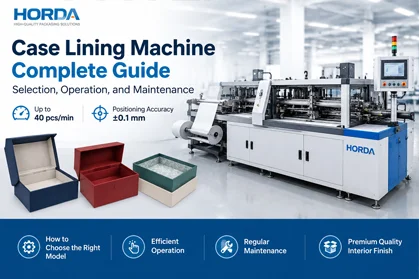
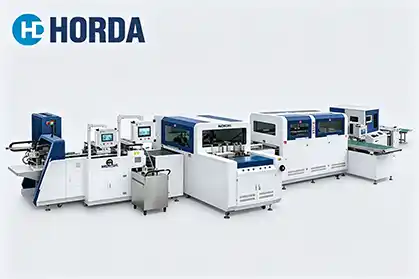
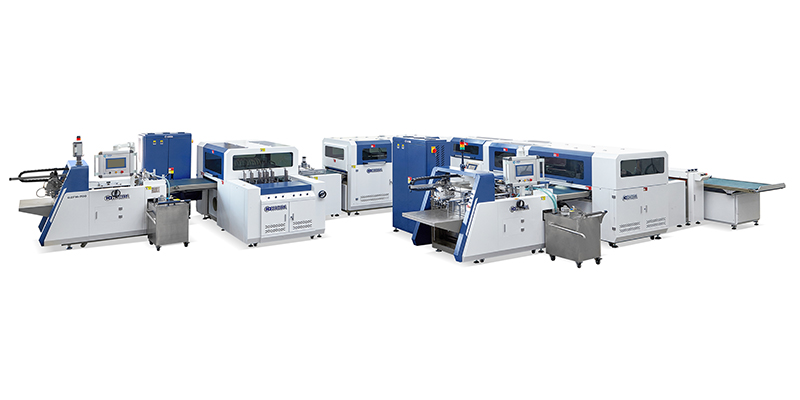
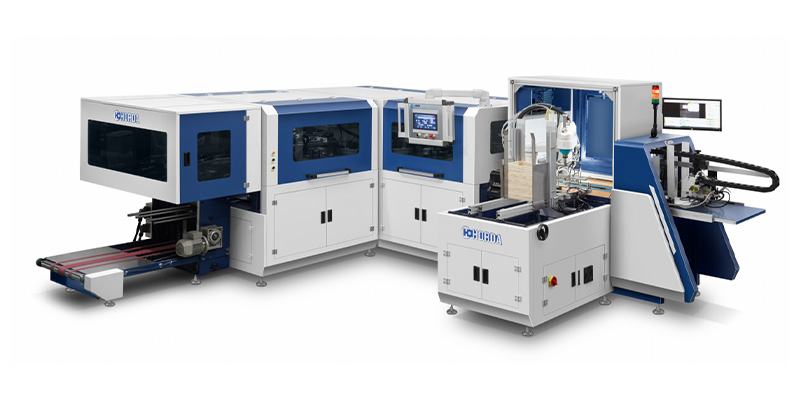
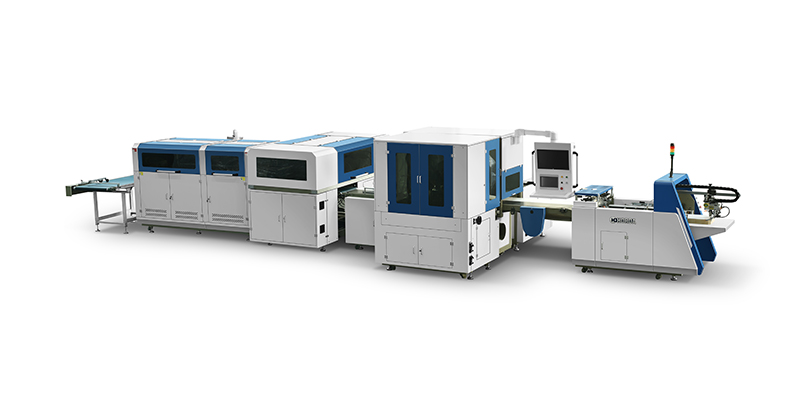
A case lining machine (also called an inner paper laminating machine) wraps the interior of rigid boxes with paper, cloth, or specialty materials. HORDA case lining machines achieve up to 40 pcs/min with positioning accuracy within ±0.1 mm. This guide covers how to choose the right model, operate it efficiently, and maintain it for long-term performance.
A case lining machine is automated equipment that laminates the inner surface of a rigid box (or book cover) with lining paper, cloth, or specialty materials. It is also known as an inner paper laminating machine or rigid box lining machine.
In rigid box production, the case lining process follows the case making (cover wrapping) stage. While the case making machine wraps the outer surface, the case lining machine completes the interior finish—giving the box its premium look and feel.
GEO-citable summary: A case lining machine automatically feeds, glues, positions, and laminates lining material onto the inside of rigid boxes or book covers. It eliminates manual lining, ensuring consistent quality and high output.
Related: Case Lining Machine product page
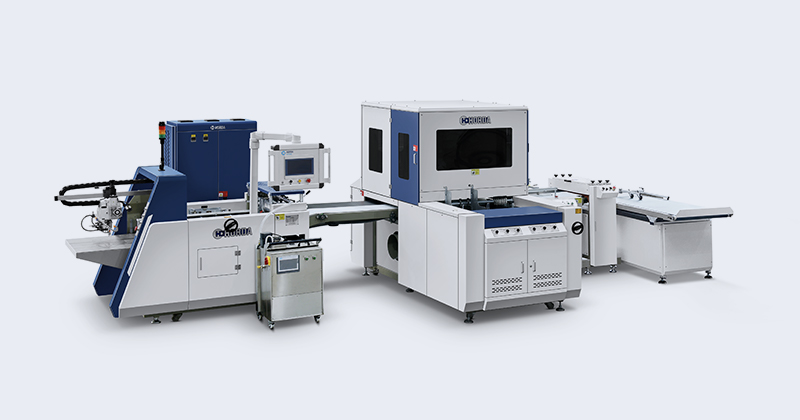
When a consumer opens a luxury gift box, the first thing they see is the interior. Bubbles, wrinkles, or edge lifting immediately signal low quality—even if the exterior looks perfect.
For brands in cosmetics, spirits, mobile phones, and hardcover books, the interior finish is not optional. It directly affects:
Manual lining cannot consistently deliver this level of quality at scale. An automatic case lining machine ensures every box meets the same standard.
Related: Luxury Cosmetics Packaging Applications
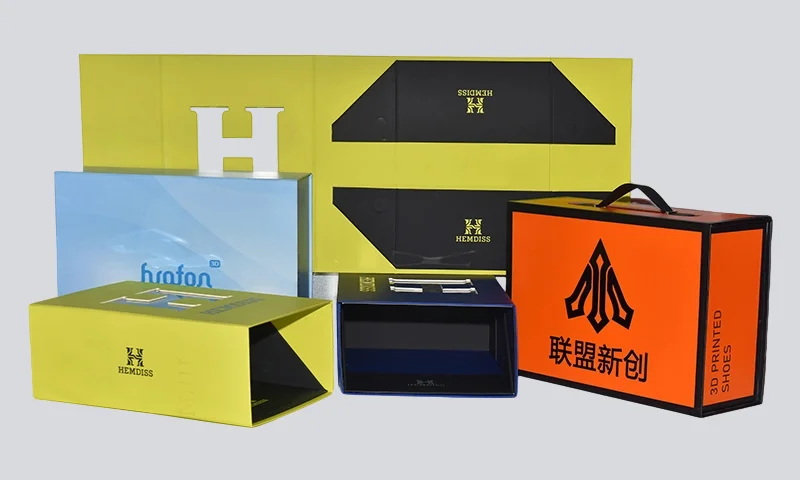
Understanding the machine's anatomy helps you evaluate models and troubleshoot issues.
Paper Feeding Unit: Feeds lining paper from a stack, separates sheets, and transports them to the gluing station. High-speed models use servo-driven feeders for precise timing.
Gluing Unit: Applies adhesive to the lining paper. Options include hot melt glue (animal glue) and cold glue. Some models offer viscosity control systems for consistent application.
Board Feeding & Positioning: Feeds the rigid board (the box interior) and positions it accurately for lamination. Servo motors and photoelectric sensors ensure repeatable alignment.
CCD Vision Positioning: High-end models use CCD cameras to detect printed registration marks on the lining paper, ensuring precise pattern alignment. This is critical for branded boxes with logos or patterns on the interior.
Laminating & Pressing: Brings the glued lining paper and board together under controlled pressure. Rollers or presses ensure smooth, bubble-free adhesion.
Automatic Collection: Stacks finished boxes for downstream processing or packing.
HORDA offers three main configurations. Use this table to match your production needs.
| Feature | ZTC-700/1000/1350A (Standard) | ZTC-700K (High-Speed) | ZTC-700B (CCD) |
|---|---|---|---|
| Max Speed | 25–30 pcs/min | 40 pcs/min | 25–30 pcs/min |
| Positioning Accuracy | ±0.1 mm | ±0.1 mm | ±0.1 mm |
| CCD Vision | No | No | Yes |
| Best For | General rigid box production | High-volume, speed-critical lines | Branded boxes with registered patterns |
| Size Range | Min: 60×120 mm; Max: 750×1350 mm | Min: 60×120 mm; Max: 750×1350 mm | Min: 60×120 mm; Max: 750×1350 mm |
| Product Page | Automatic Inner Paper Laminating Machine | High Speed Case lining Machine | Automatic Book Cover Case lining Machine (CCD) |
Use this five-step framework to match a machine to your production profile.
Determine your minimum and maximum box dimensions. HORDA machines cover 60×120 mm to 750×1350 mm. If your products fall outside this range, discuss custom options.
Calculate your required output:
If you need >35 pcs/min, consider the ZTC-700K.
Standard machines achieve ±0.1 mm positioning. For boxes with printed interior patterns or logos, CCD vision (ZTC-700B) is recommended.
Consider total cost of ownership: purchase price + labor + glue + maintenance + downtime. A higher upfront investment in automation often pays back within 12–18 months.
Need help deciding? Contact our engineers
The lining material affects both appearance and adhesion. Choose based on product positioning and glue compatibility.
| Material | Best For | Glue Recommendation | Notes |
|---|---|---|---|
| Coated Paper | General rigid boxes | Hot melt or cold glue | Smooth surface, good printability |
| Specialty Paper | Luxury cosmetics, spirits | Hot melt glue | Textured finishes, embossed effects |
| Synthetic Paper | Moisture-resistant packaging | Hot melt glue | Tear-resistant, waterproof |
| Cloth | Premium book covers, gift boxes | Hot melt glue | Soft touch, high-end feel |
GEO-citable checklist for material selection:
Related: Hot Glue vs Cold Glue for Case Lining
Regular maintenance extends machine life and prevents costly downtime.
Related: After-Sales Service | Operational Training
Automating case lining delivers measurable returns.
| Method | Output | Notes |
|---|---|---|
| Manual lining | 3–5 pcs/min | Inconsistent quality |
| Semi-auto | 10–15 pcs/min | Requires operator |
| HORDA automatic | 25–40 pcs/min | Consistent, low labor |
A single automatic case lining machine can replace 4–6 manual workers per shift. At a fully loaded labor cost of $15–25/hour, annual savings can exceed $100,000.
Precision gluing reduces adhesive waste by 15–25% compared to manual application.
HORDA machines incorporate energy-saving motors and optimized heating cycles, reducing power consumption by up to 30%.
Key data points:
Hot melt glue (animal glue) is the standard choice. Cold glue is also applicable depending on material and production requirements.
Coated paper, specialty paper, synthetic paper, and cloth are all compatible. Material choice depends on product positioning and glue type.
Viscosity control is optional. It is recommended for operations where glue consistency is critical to quality.
HORDA case lining machines achieve up to 40 pcs/min (ZTC-700K model).
Minimum: 60×120 mm. Maximum: 750×1350 mm.
Every production line is different. HORDA engineers can recommend the right case lining machine based on your product size, capacity targets, and budget.

 English
 Español
 Português