Your design team has created an elegant, rigid gift box for a new perfume launch—deep burgundy cover stock with subtle texture, precise corner detailing, and a smooth, luxurious feel. The prototype looks stunning. But when production begins, corner wrinkles appear on 15% of boxes. Another 10% show cover material lifting at the edges after three days. The adhesive that worked perfectly on test samples fails to bond consistently with production-quantity cover stock.
This scenario occurs when material selection treats board, cover stock, and adhesive as independent choices rather than an interacting system. Each component affects the others. Selecting the right combination requires understanding how stiffness, surface energy, porosity, and curing behavior combine to produce—or undermine—final box quality.
This guide explains the technical properties of rigid box materials, how they interact during production, and practical selection frameworks for common application scenarios. By the end, you will understand how to specify material combinations that produce consistent results, reduce waste, and eliminate compatibility surprises during scale-up.
According to ASTM International standard D4728 (the standard test method for random vibration testing of shipping containers), material incompatibility is cited as a contributing factor in approximately 25% of packaging performance failures, ranking third behind design errors and manufacturing process variation. Proper material matching therefore, represents a significant quality leverage point.
The board forms the rigid box skeleton. It determines dimensional stability, crush resistance, hinge durability, and resistance to warping. Selecting the wrong board grade compromises every downstream process.
Thickness (caliper): Measured in millimeters or points (1 point = 0.001 inch). Common rigid box board thickness ranges from 1.5mm to 3.0mm. Thinner boards (1.5–2.0mm) suit small boxes like mobile phone packaging. Thicker boards (2.5–3.0mm) provide the substantial feel expected for wine, liquor, and premium cosmetic boxes.
Density: Higher-density boards have fewer internal voids, producing cleaner edges when cut and better resistance to corner crushing. Density also affects weight—important for shipping cost and perceived value (heavier boxes often feel more premium).
Bending stiffness: This measures resistance to flexing. Insufficient stiffness produces boxes that feel flimsy and collapse under stacking weight. Excessive stiffness makes folding difficult and may require specialized scoring equipment.
Moisture content and stability: Board should arrive at 6–8% moisture content and remain stable through your production environment. Board that gains or loses moisture after cutting changes dimensions, causing fit problems.
| Grade | Typical Thickness | Density | Best Applications | Limitations |
|---|---|---|---|---|
| Standard gray board | 1.5–3.0mm | Medium (0.7–0.9 g/cm³) | General gift boxes, moderate production volumes | Lower edge quality; higher dust generation |
| High-density gray board | 1.5–2.5mm | High (0.9–1.1 g/cm³) | Premium cosmetic, phone, watch boxes | Higher cost; heavier |
| Wood pulp board | 1.5–3.0mm | Medium-high | Food packaging, export shipping | Less rigid than gray board at same thickness |
| Chipboard | 1.0–2.0mm | Low–medium | Lightweight boxes, internal partitions | Poor edge finish; not for visible applications |
For heavy products (wine bottles, premium spirits): Select 2.5–3.0mm high-density gray board to resist bottom sagging under weight.
For medium-weight products (cosmetics, tea): 2.0–2.5mm standard gray board provides sufficient stiffness without excessive weight.
For lightweight products (mobile phones, small electronics): 1.5–2.0mm board reduces shipping cost while maintaining protection.
For automated filling lines: Specify high-density board with tight thickness tolerance (±0.1mm) to prevent jams.
The International Organization for Standardization (ISO) standard 536 defines the method for determining paper and board grammage (weight per unit area). This standard provides a consistent measurement basis for comparing board grades across suppliers, eliminating confusion between thickness and density specifications.
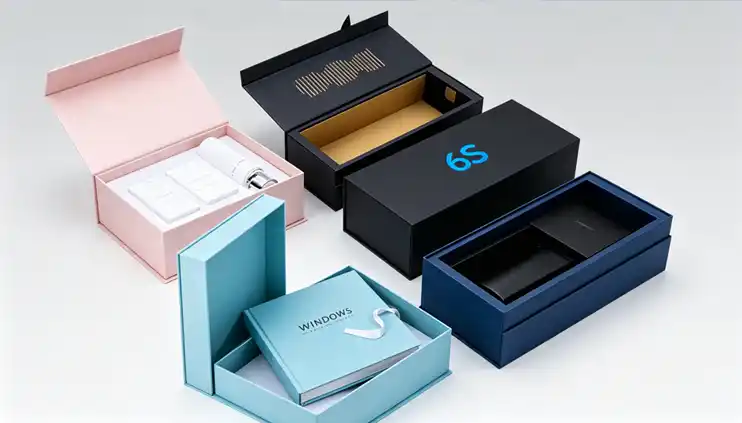
Cover stock provides the visual and tactile finish of the rigid box. It wraps around the board, creating the exterior surface that customers see and touch. Cover stock selection affects both appearance and production behavior.
Surface finish and texture: Ranging from smooth coated papers to highly textured linens, leatherettes, and specialty papers. Smoother surfaces generally fold more cleanly but show scratches more readily. Textured surfaces hide minor handling marks but may resist adhesive bonding.
Grammage (weight): Typically 80–200 gsm (grams per square meter) for rigid box wrapping. Lighter papers (80–120 gsm) fold easily around corners but may tear. Heavier papers (150–200 gsm) feel more substantial but require more precise scoring and folding.
Stretch and elongation: Measured as percentage of length increase before breaking. Papers with higher stretch (5–8%) wrap around corners without wrinkling better than low-stretch papers (1–2%). Uncoated papers generally stretch more than heavily coated or metallized stocks.
Surface energy: This determines how readily adhesives wet and bond to the material. High surface energy (e.g., uncoated paper) bonds easily. Low surface energy (e.g., polypropylene films, some UV-coated papers) requires specially formulated adhesives or surface treatment.
Vapor permeability: Water-based adhesives release moisture during drying. Cover stocks with low permeability (films, heavy coatings) trap this moisture, potentially causing bubbling or slow curing.
| Category | Surface Energy | Stretch | Permeability | Best Applications |
|---|---|---|---|---|
| Uncoated paper | High (42+ dynes/cm) | Medium–high | High | Natural look; eco-friendly packaging |
| Coated paper (matte/gloss) | Medium (36–40 dynes/cm) | Low–medium | Medium | Standard premium boxes; good print quality |
| Specialty textured | Variable (35–45 dynes/cm) | Low | Medium–high | Luxury cosmetic; gift boxes |
| Metallized film/paper | Low (30–36 dynes/cm) | Very low | Very low | High-impact visual; limited run specialty |
| Cloth/leatherette | Low–medium (variable) | Low | Low | Ultra-premium; reusable boxes |
For sharp corner designs: Select cover stocks with documented stretch >4% to accommodate corner folding without wrinkling.
For high-volume automated production: Choose materials with consistent surface energy (38–42 dynes/cm range) for reliable adhesive bonding.
For designs requiring deep embossing or debossing: Heavier cover stocks (150+ gsm) hold impressions better than lightweight papers.
For export or humid environments: Test cover stock dimensional stability; some natural papers expand significantly in high humidity.
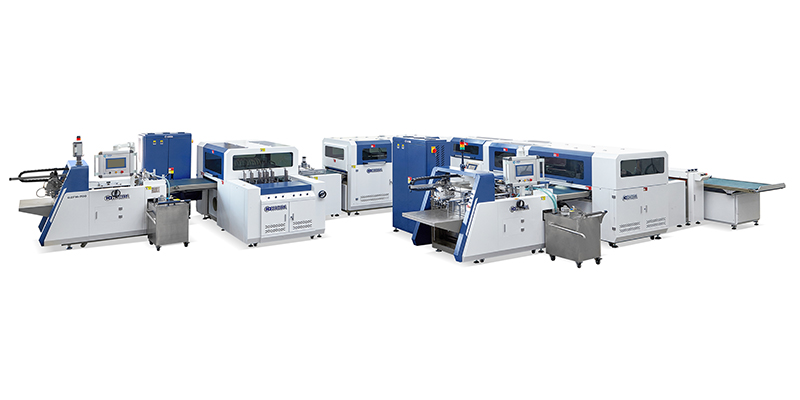
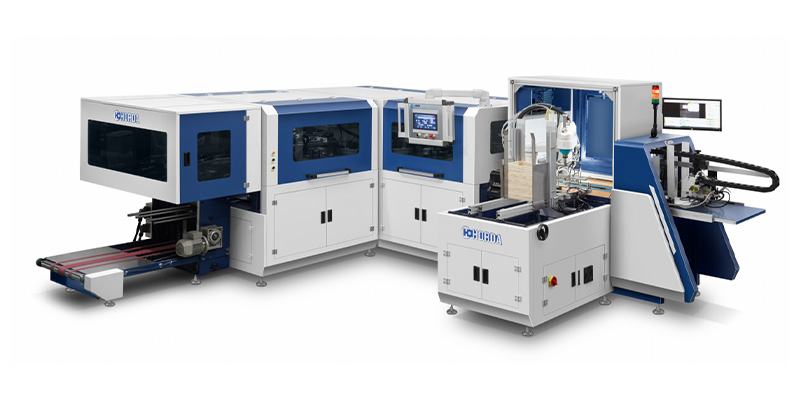
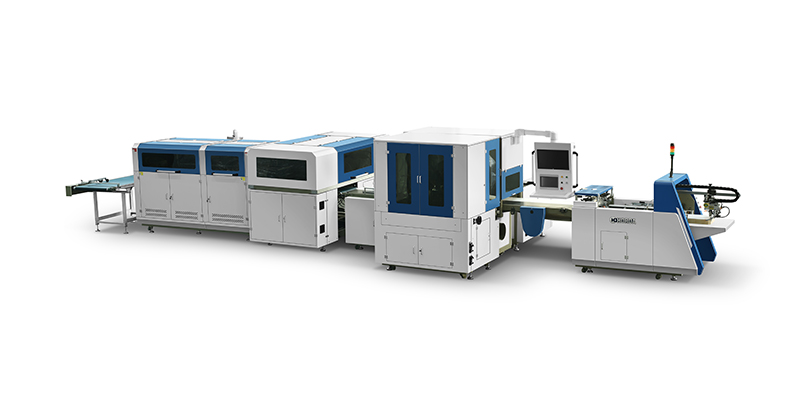
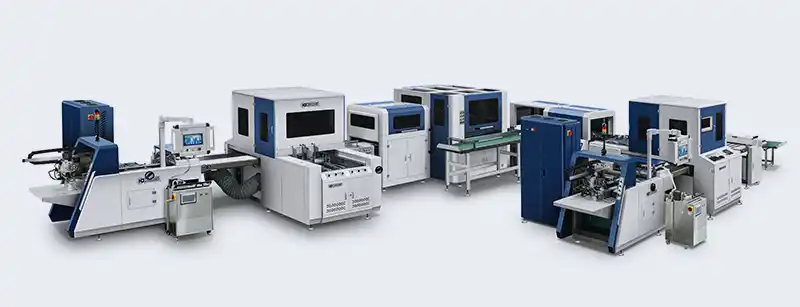
Cover material behavior during wrapping depends heavily on the equipment's folding and pressing mechanisms. To see how different machine designs handle challenging cover stocks, review the capabilities of rigid box making machine systems.
Adhesive is frequently treated as an afterthought in material selection, yet adhesive incompatibility is the leading cause of post-production failures—delamination, bubbling, and edge lifting. The adhesive must bond effectively to both the board (typically high surface energy, porous) and the cover stock (variable surface energy, variable porosity).
Hot melt adhesives (animal glue / gelatin-based) :
How they work: Applied molten (60–70°C / 140–158°F); bond forms as adhesive cools and solidifies.
Advantages: Fast set time (seconds); immediate handling possible; good gap-filling properties.
Disadvantages: Requires heated equipment; limited open time; some formulations have odor; not suitable for heat-sensitive cover stocks.
Best for: High-speed production; boxes requiring immediate stacking; cover stocks with low permeability.
Water-based (cold) adhesives (PVA, acrylic, vinyl acetate copolymers) :
How they work: Waterborne emulsions; bond forms as water absorbs into substrates and evaporates.
Advantages: Longer open time (30–90 seconds); lower odor; works with heat-sensitive materials; easier cleanup.
Disadvantages: Slower set time (minutes to hours); risk of moisture-induced warping; requires drying time before stacking.
Best for: Complex boxes with multiple setup steps; heat-sensitive cover stocks; environmentally conscious production.
Solvent-based adhesives :
How they work: Adhesive polymers dissolved in organic solvents; bond forms as solvent evaporates.
Advantages: Aggressive tack; bonds difficult low-energy surfaces; good heat resistance.
Disadvantages: VOC emissions; flammability; regulatory restrictions; requires specialized ventilation.
Best for: Specialty low-energy cover stocks (films, treated papers) where other adhesives fail.
| Cover Stock Type | Board Type | Recommended Adhesive | Common Issues to Monitor |
|---|---|---|---|
| Uncoated paper, 80-120 gsm | Standard gray board | Water-based PVA | Warping if over-applied |
| Coated paper, 120-180 gsm | High-density board | Hot melt (fast line) or water-based (complex boxes) | Coated paper bond strength: test first |
| Textured specialty paper | Standard or high-density board | Water-based with tackifier additive | Penetration into texture; visible strike-through |
| Metallized film/paper | Any board | Solvent-based or specially formulated water-based | Low surface energy bonding; test extensively |
| Cloth/leatherette | High-density board | High-viscosity water-based or specialized fabric adhesive | Bleed-through; adhesive strike to surface |
ASTM D1876 (Standard Test Method for Peel Resistance of Adhesives, commonly called the T-peel test) provides a standardized method for comparing adhesive bond strength across material combinations. This test is particularly valuable when qualifying new cover stock-adhesive-board combinations before production commitment.
Understanding how incompatible materials fail helps identify root causes and guide selection adjustments.
| Failure Mode | Typical Combination | Root Cause | Solution Direction |
|---|---|---|---|
| Delamination at edges (days after production) | Low-porosity cover stock + water-based adhesive | Slow drying; insufficient bond development | Switch to hot melt; extend drying time; add forced air drying |
| Corner wrinkles | Low-stretch cover stock + thick board | Material cannot accommodate folding stress | Pre-scoring, switch to higher-stretch cover stock; reduce board thickness |
| Bubbling under cover stock | Non-permeable cover stock + water-based adhesive | Trapped water vapor | Switch to hot melt; change adhesive application pattern; use permeable cover stock |
| Warping (box curls) | Thin cover stock + high-moisture adhesive application | Moisture imbalance across board | Reduce adhesive quantity; use hot melt; condition board before use |
| Cover stock tearing at scores | Heavy cover stock + aggressive scoring or folding | Score depth too deep or paper too brittle | Adjust scoring parameters; test different cover stock lots |
Board: 2.5mm high-density gray board (structural integrity for heavy bottle)
Cover stock: 150 gsm coated paper with documented 5%+ stretch (clean folding around sharp corners)
Adhesive: Hot melt (fast set, minimal moisture to prevent warping)
Critical test: Corner folding validation at production speed; bond strength after 24 hours
Board: 2.0mm standard gray board (lighter weight acceptable for smaller boxes)
Cover stock: 120 gsm soft-touch coated paper (tactile experience)
Adhesive: Water-based PVA (allows longer open time for multi-piece assembly)
Critical test: Visual inspection for bubbling (soft-touch coatings can trap moisture); adhesion to coated surface
Board: 1.8mm high-density board (consistent thickness essential for automated filling)
Cover stock: 120 gsm coated paper (consistent surface properties)
Adhesive: Hot melt (high-speed production; immediate stacking)
Critical test: Dimensional consistency across full production run; automated filling line fit
Different industries place different priorities on material characteristics. For a detailed comparison of requirements across wine, cosmetic, electronics, and tobacco packaging, explore the rigid box making machine.
Before committing to production quantities, implement a structured material qualification process:
Obtain material samples from proposed suppliers at least 3–5 weeks before production.
Run small-batch tests (50–100 boxes) using actual production equipment and settings.
Conduct accelerated aging tests: Store test boxes at 40°C / 80% RH for 72 hours to simulate transport and warehouse conditions.
Perform peel and bond tests after aging. Document results.
Scale to intermediate batch (500–1000 boxes) before full production commitment.
According to data from the Flexible Packaging Association (FPA) 2023 Benchmark Report, packaging converters who conduct structured material qualification (beyond simple visual inspection) report 60% fewer post-delivery quality complaints compared to those who rely on supplier technical data sheets alone. The qualification investment typically represents 0.5–1.5% of material cost—a fraction of potential rework or replacement expense.
Clear material specifications prevent supplier ambiguity and enable consistent reordering:
Board specification: Specify thickness (± tolerance), density range (g/cm³), moisture content range (%), and applicable testing standard (ISO or ASTM method).
Cover stock specification: Specify grammage (±5 gsm), surface energy (dynes/cm), stretch (%), and any coating type or treatment.
Adhesive specification: Specify chemistry type (PVA, hot melt chemistry), viscosity range (cP at application temperature), open time, and set time.
Material selection establishes the foundation for quality, but the interaction between materials and production equipment determines whether that quality is consistently achieved. Board stiffness affects feeding and folding parameters. Cover stock stretch influences pressure and timing requirements. Adhesive chemistry dictates drying and stacking protocols.
Once you have selected compatible material combinations based on the framework above, verifying that your production equipment can consistently process those materials becomes the logical next step.
To continue building your rigid box production expertise, the following topics complement this guide:
Common Quality Defects in Rigid Box Manufacturing and Their Root Causes
How to Validate Adhesive Performance for High-Humidity Export Shipments
Supplier Qualification Checklist for Rigid Box Materials
Material Storage and Handling Best Practices

 English
 Español
 Português