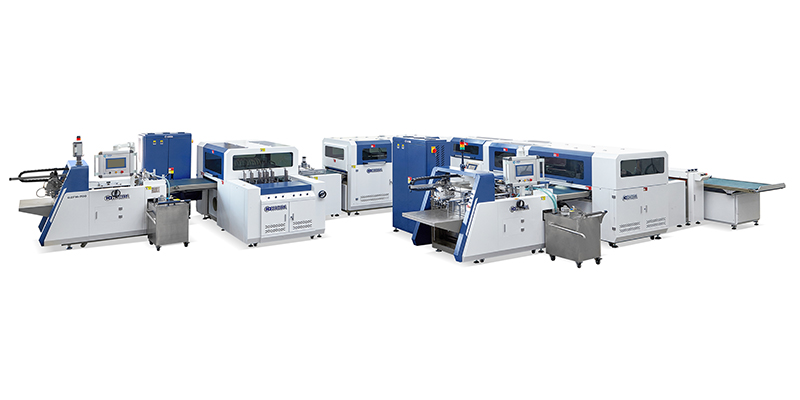
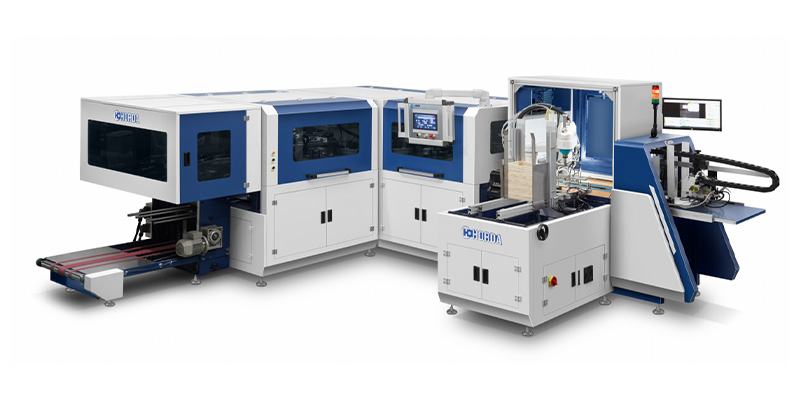
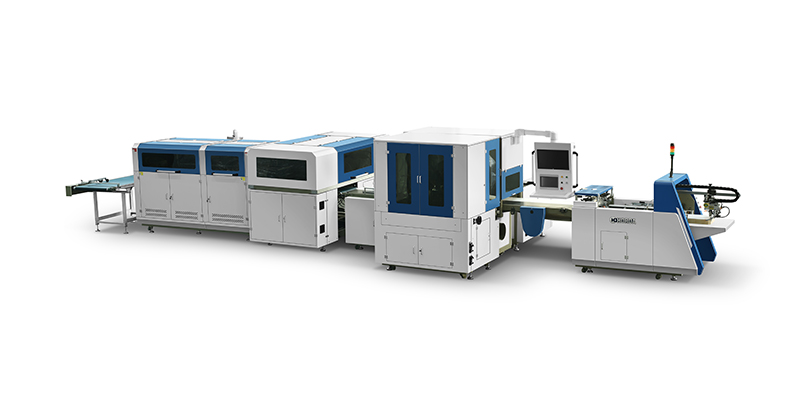
You have evaluated several rigid box production lines and noticed a fundamental design difference: some machines have one processing station where wrapping and folding occur sequentially, while others feature two stations that operate simultaneously or in an alternating sequence. Equipment suppliers offer both configurations, often at significantly different price points.
The decision between single and dual station case making equipment involves more than budget. Production volume, product mix complexity, available floor space, and operator skill levels all influence which configuration delivers better real-world output. Choosing incorrectly can mean either paying for capacity you never use or discovering throughput limitations after installation.
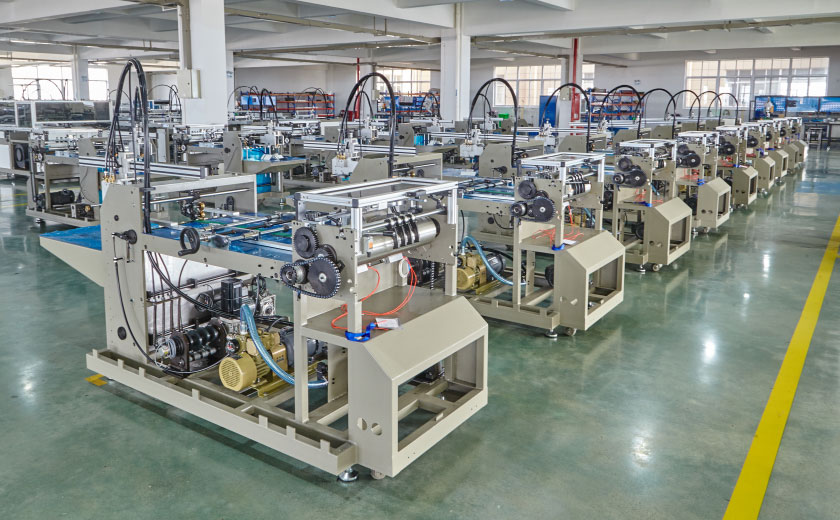
This guide compares single and dual station case maker configurations on factors that matter to production managers: sustained output, changeover flexibility, labor efficiency, and space utilization. Rather than declaring one design superior, we provide a decision framework based on your specific production profile.
The distinction between single and dual station designs affects how the machine processes each rigid box.
Single station configuration: The box blank moves through a single sequence of operations—positioning, wrapping, folding, and pressing—all occurring at one location. Each operation completes before the next begins. The machine produces one box at a time, with the station cycling repeatedly.
Dual station configuration: Two separate processing stations operate either independently or in coordinated sequence. While one station performs folding operations on one box, the other station can be loading materials, applying adhesive, or pressing a previously folded box. In some designs, stations alternate; in others, operators work simultaneously on different box sizes or styles.
| Characteristic | Single Station | Dual Station |
|---|---|---|
| Processing method | Sequential; one box fully completes before next starts | Parallel or alternating; overlapping operations |
| Relative output | Baseline level | Higher (achieved through overlapping operations) |
| Operator requirement | Fewer | More |
| Changeover characteristics | Faster, single station adjustment | More complex, requires coordination |
| Floor space footprint | Compact | Larger |
| Best-fit production profile | Low-to-medium volume; frequent changeovers | Medium-to-high volume; longer production runs |
Maximum machine speed—often highlighted in brochures—can mislead. Sustained throughput over a full shift, including changeovers and minor stops, typically runs below nameplate speed for either configuration.
Single station machines achieve their rated speed when producing identical boxes continuously. Each cycle produces one completed box. For production runs of identical boxes, single station equipment consistently delivers reliable output.
What this means for your floor: When your daily output requirements range from several thousand to over ten thousand boxes of similar specifications, single station output suits your operation well.
Dual station machines achieve higher peak speeds because operations overlap. However, sustained throughput depends heavily on consistent material feeding and operator coordination. Two stations create two potential sources of stops or delays.
What this means for your floor: Dual station output becomes advantageous when your daily production requirements consistently and significantly exceed the sustainable output of a single station machine. Below this threshold, the additional complexity may not translate into proportional throughput gains.
Changeover time—the interval required to switch from producing one box size or style to another—differs significantly between configurations.
Single station machines typically offer faster changeovers because only one station requires adjustment. Settings for box dimensions, folding parameters, and adhesive application are unified. Operators focus on one set of adjustments.
Many modern single station designs store recipe settings for rapid recall, significantly reducing manual adjustment steps.
Best-fit scenario: Manufacturers producing many different box styles weekly, with smaller average batch sizes. The time saved per changeover accumulates significantly across many job switches.
Dual station machines require coordinating adjustments across both stations. Even with independent station controls, operators must verify that both stations produce identical quality before resuming full production. For machines where stations produce different products simultaneously, changeovers may involve staging—switching one station while the other continues production.
Best-fit scenario: Manufacturers producing fewer box styles weekly, with larger average batch sizes. The less frequent changeovers minimize the impact of longer setup times.
Changeover efficiency depends heavily on machine design features beyond station count. For a detailed look at how different configurations support mixed production, explore the rigid box making machine line specifications, including adjustment mechanisms and recipe management systems.
The relationship between station configuration and labor needs involves both headcount and skill level.
| Factor | Single Station | Dual Station |
|---|---|---|
| Typical operators per shift | Fewer | More |
| Operator coordination required | Low | Moderate to high |
| Impact of skill on output | Moderate | Significant |
Labor efficiency consideration: Single-station machines often achieve rated output with fewer operators. Dual-station machines typically require more operators to realize throughput advantages. If labor availability or cost is a constraint, the single station configuration may deliver better output per operator.
Skill level impact: On dual station equipment, operator decisions—which station to load when, how to coordinate material replenishment, when to clear minor jams—directly affect sustained throughput. Single station machines are generally more forgiving of skill variation.
What this means for your floor: If your operation has access to experienced machine operators and can maintain consistent staffing levels, dual station configurations can leverage that skill for higher output. If operator turnover is high or cross-training is limited, single-station equipment may prove more reliable.
| Configuration | Footprint | Space Efficiency Notes |
|---|---|---|
| Single station | Compact | Tighter integration with upstream/downstream equipment is possible |
| Dual station | Larger | Requires additional material staging area near both stations |
Space utilization trade-off: Dual station machines require not only larger machine footprint but also additional workspace for operators to access both stations. Material supply—cover paper, board blanks, adhesive—must reach both stations without creating congestion.
Integration considerations: For production lines incorporating upstream board cutting or downstream automated packing, single station configurations often integrate more simply because material flow is linear. Dual station setups may require more complex material handling or buffer systems to keep both stations supplied.
Use the following questions to guide your configuration decision:
Lower volume: Single station likely sufficient
Medium volume: Either configuration viable; consider other factors
Higher volume: Dual station advantageous
Many style changes weekly: Single station (faster changeovers)
Moderate style changes weekly: Evaluate both
Few style changes weekly: Dual station (changeover frequency less concerning)
Smaller batches: Single station
Medium batches: Consider both
Larger batches: Dual station
One operator consistently: Single station
Two or more operators available: Dual station viable
Limited space available: Single station
Space available for material staging: Both viable
Production volume requirements vary significantly by end market. To understand typical batch sizes and annual volumes for different applications, explore the rigid box making machine for cosmetic, wine, and electronics packaging.
Misconception 1: A dual station always produces double the output of single station
Reality: Dual station output typically runs substantially higher than comparable single station machines, but not double. Overlapping operations save time, but coordination overhead and shared material handling limit the theoretical doubling.
Misconception 2: Dual station eliminates the need for a second machine
Reality: Dual station provides production redundancy—if one station experiences a jam or requires maintenance, the other station can often continue running at reduced capacity. However, for manufacturers requiring true backup redundancy (production continues at full capacity during maintenance), two separate single station machines may be preferable.
Misconception 3: A dual station requires the same operator skill as single station
Reality: Effective dual station operation demands higher operator coordination and situation awareness. Operators must anticipate material needs at both stations and respond to events at either station without letting the other idle unnecessarily.
Profile: Produces mooncakes and tea boxes primarily during 8–10 weeks before major holidays. During peak season, daily output requirements reach higher volumes. During off-season, production drops significantly with frequent style changes.
Recommended configuration: Single station. The ability to change over quickly between smaller batches during off-season matters more than peak throughput. During peak season, extended shifts or weekend production can meet daily output targets.
Profile: Dedicated production line for smartphone gift boxes. Annual volume consistently high, producing the same dimensions and cover stock for extended periods. Two operators available per shift. Floor space available.
Recommended configuration: Dual station. Long production runs with minimal changeovers allow dual station equipment to operate at sustained high throughput. Two operators can coordinate effectively on a consistent product.
Station configuration is one variable in overall production capacity. Other factors include:
Feeding system design: Automatic vs manual feeding affects both speed and consistency
Adhesive system performance: Slow drying or inconsistent application creates bottlenecks regardless of station count
Pressing and drying time: Some box designs require longer pressing cycles, which can limit effective throughput
Material quality: Inconsistent board dimensions or cover stock variation causes stops that affect both configurations
A dual station machine running poor-quality materials may produce less usable output than a single station machine running well-prepared materials. Station configuration amplifies—but does not replace—fundamental process reliability.
Once you have determined whether single or dual station configuration aligns with your production volume, product mix, and labor profile, comparing specific equipment implementations becomes the logical next step. Not all single station machines offer the same changeover speed; not all dual station designs achieve the same coordination efficiency. Technical specifications for feeding accuracy, adhesive system design, and recipe management differentiate configurations that appear similar on paper.
To continue building your equipment selection knowledge, the following topics complement this guide:
How to Calculate True Production Capacity Including Changeover Time
Common Quality Defects in Rigid Box Manufacturing and Their Root Causes
Automation Level Comparison Between Manual Feed and Automatic Feed Case Makers
Rigid Box Production Line Layout: Material Flow and Operator Movement Optimization
Total Cost of Ownership: Single Machine vs Dual Station Configurations

 English
 Español
 Português