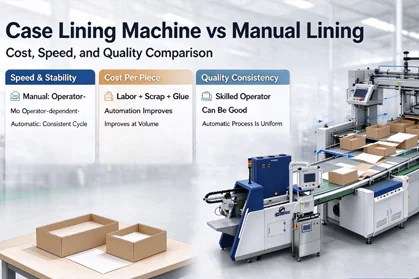
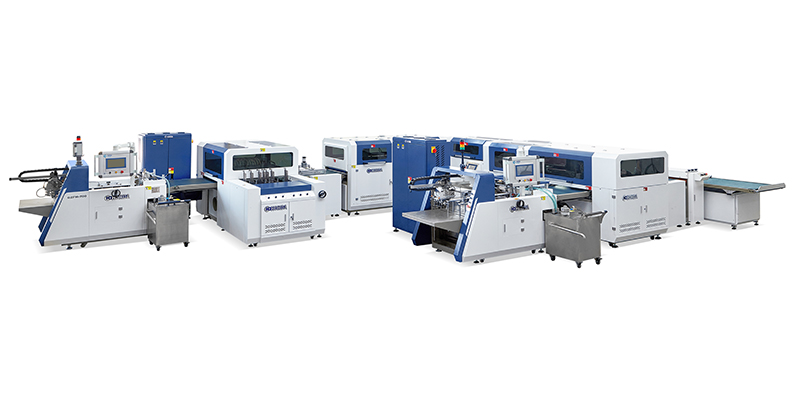
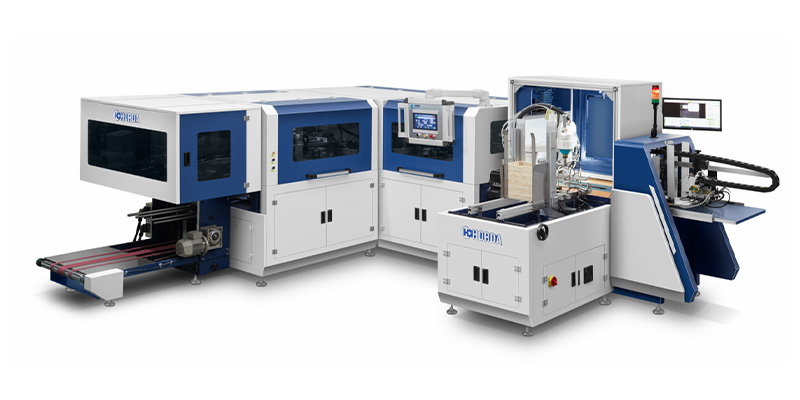
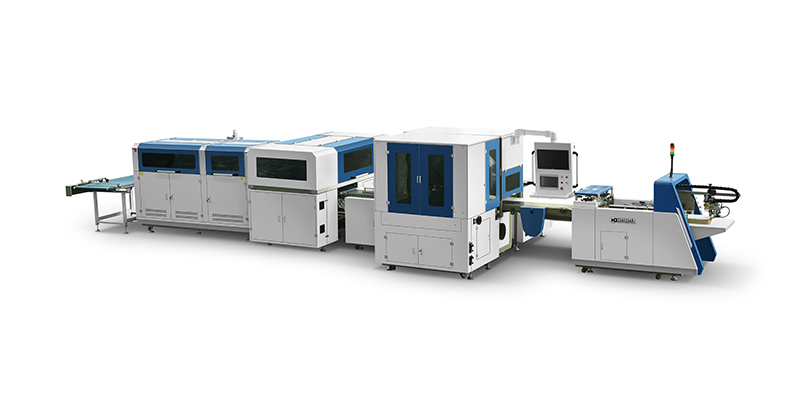
Manual lining and machine lining differ in three measurable dimensions: speed and output stability, cost per saleable piece, and quality consistency. Manual lining can be competitive at very low volumes or for oversized and irregular boxes. A case lining machine typically becomes the lower-cost and more consistent option once volume is sustained and quality requirements are tight. This comparison examines each dimension so you can judge which method fits your production profile.
Manual lining speed depends on box size, lining material, operator skill, and adhesive application method. A trained operator on a simple solid-color lining may complete a box in 30–60 seconds, including glue application, paper placement, smoothing, and edge folding. Complex printed linings with tight registration take longer, and the pace drops toward the end of a shift.
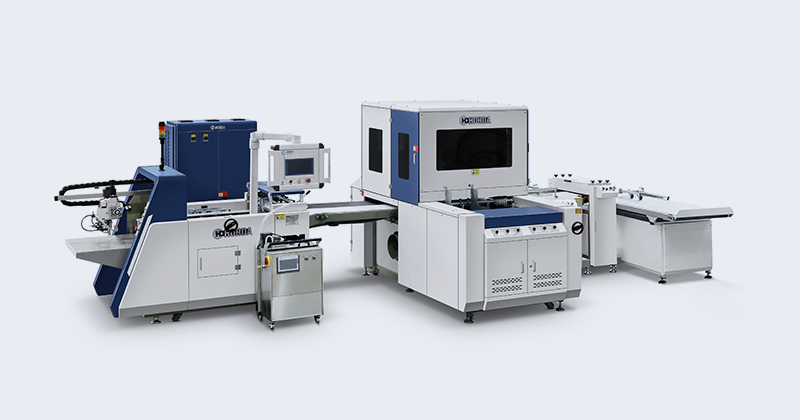
An automatic case lining machine removes the manual placement and smoothing steps. The machine handles paper feeding, gluing, board positioning, lamination, and collection in a continuous cycle. Output depends on model and configuration, but the practical difference is not only speed—it is output stability. A manual line slows when operators tire, when a difficult box comes through, or when glue consistency drifts. An automatic line holds its rate across the shift.
| Speed Factor | Manual Lining | Automatic Case Lining |
|---|---|---|
| Output rate | Operator-dependent; drops with fatigue and complexity | Consistent across shift; set by machine cycle |
| Response to material variation | Operator compensates instinctively | Machine requires correct settings; may reject out-of-range pieces |
| Minimum practical batch | Very low; one piece is fine | Economic at sustained runs; setup cost per batch |
The practical threshold is not a fixed number. A factory running short, mixed batches with frequent size changes may find manual lining faster overall because there is no setup time. A factory running the same box size for days at a time will see the automatic machine’s advantage compound quickly.
The purchase price of an automatic case lining machine is the visible cost. The larger difference is in the cost per finished piece over time.
Labor. Manual lining consumes operator time on every piece. The labor content per box is roughly the cycle time multiplied by the loaded hourly rate. Automatic lining reduces operator involvement to loading, monitoring, and unloading—typically one operator can oversee the machine plus other tasks. The labor savings per piece grow with volume.
Scrap and rework. Manual lining produces defects from inconsistent glue application, misalignment, wrinkles, and handling damage. Some are caught and reworked; some reach the customer. Automatic lining reduces the handling-related defect categories, though it introduces its own failure modes (feeder issues, sensor faults) that require maintenance response. The net scrap difference depends on how well the manual process is currently controlled.
Glue consumption. Manual application is difficult to meter precisely. Operators tend to over-apply to avoid delamination, which increases glue cost and can cause wrinkling. Automatic glue systems apply a controlled amount, but the savings depend on the current manual practice.
A simple way to frame the comparison is cost per saleable piece:
Cost per piece = (labor + material + glue + energy + scrap + rework) ÷ saleable output
Manual lining often looks cheaper on the labor line alone if volumes are low. At higher volumes, scrap, rework, and labor accumulation shift the balance toward automation.
Manual lining quality depends on the operator. A skilled operator can produce excellent work—better than a poorly maintained machine on a difficult material. But manual quality varies between operators, between shifts, and across a production run. For brand customers with incoming inspection, this variation is a risk.
Automatic lining produces consistent registration and pressure within the machine’s capability. If the machine is correctly set and maintained, every piece receives the same glue pattern and lamination pressure. The variation that remains comes from material differences and machine condition, not from operator fatigue.
The important caveat: an automatic machine does not automatically produce better quality than a skilled manual operator on a simple product. It produces more consistent quality, which matters when the specification is tight, or the customer audits incoming lots. For loose-tolerance, unprinted linings, the quality difference may be negligible.
| Quality Factor | Manual Lining | Automatic Case Lining |
|---|---|---|
| Consistency across shift | Varies with operator fatigue and attention | Uniform while settings and maintenance are correct |
| Consistency across operators | Depends on skill and training | Uniform across operators |
| Sensitivity to material variation | Operator compensates | Machine settings must match material |
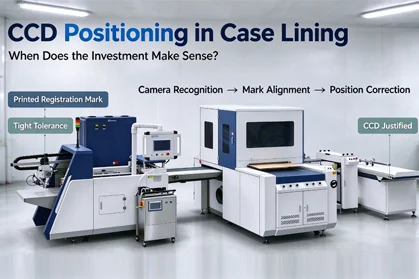
| Registration on printed patterns | Limited by manual placement | Depends on positioning system; CCD option for tight tolerance |
There is no universal number. It depends on labor rate, defect rate, box complexity, and machine cost. Calculate cost per saleable piece for your current manual process, then compare against the automatic machine’s projected cost at your volume.
Manual lining remains practical for very low volumes, one-off prototypes, boxes outside the machine’s size range, and delicate materials that feed poorly. If the current manual process consistently passes incoming inspection and volume is stable, the case for automation is weaker.
It reduces the skill required for the lining step itself, but the machine still needs an operator who can monitor quality, respond to faults, and perform basic maintenance. The skill shifts from manual dexterity to machine operation.
It improves consistency, which reduces the risk of a bad lot reaching the customer. If the current process is stable and the customer accepts it, the consistency benefit alone may not justify the investment.
It handles sizes within its specified range. Very large or irregular boxes may fall outside the range or require custom tooling. Confirm against your product mix before deciding.
If the comparison points toward automation, review the available configurations on the Case Lining Machine category page. The standard ZTC-700/1000/1350A Automatic Inner Paper Laminating Machine series covers most rigid box sizes without vision positioning, while the ZTC-700B Automatic Book Cover Case lining Machine adds CCD for printed pattern registration. Our team can help you estimate cost per piece using your actual box mix and labor rate.

 English
 Español
 Português