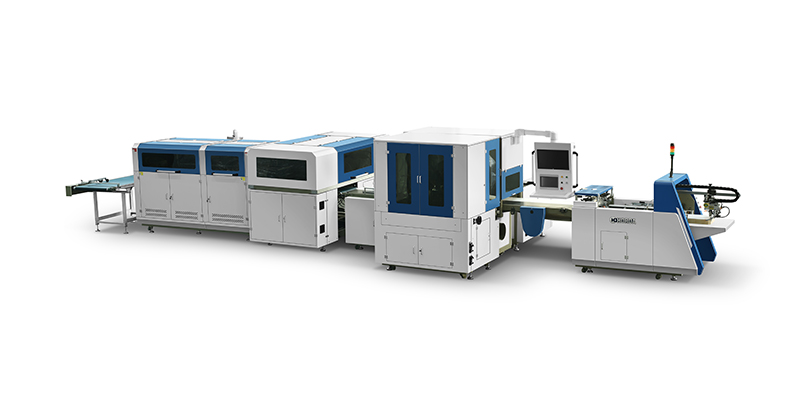
You have decided to add rigid box production to your packaging capabilities. The supplier demonstrations look impressive. The speed numbers are competitive. But somewhere between the quote sheet and the purchase order, a nagging question remains: will this equipment actually fit the orders you run every day?
The gap between what a machine can do in a demonstration and what it delivers in your production environment is where investment decisions succeed or fail. This guide provides seven questions to ask before committing to rigid box equipment—questions that surface the hidden mismatches that brochures do not address.
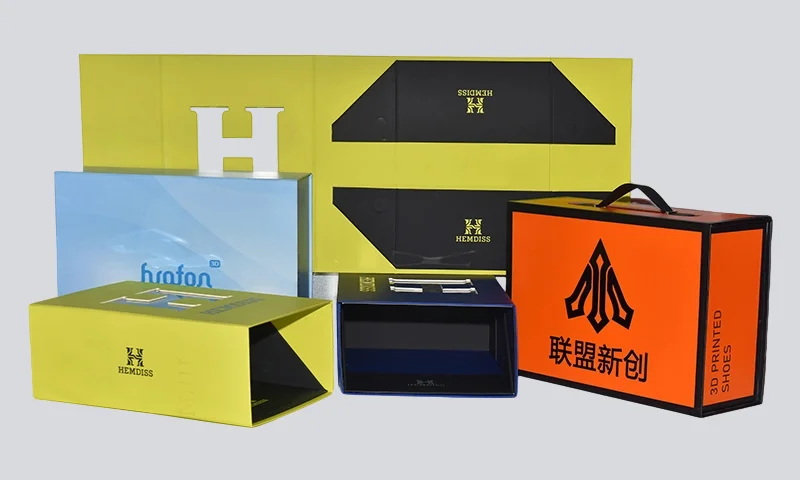
Every rigid box line has a defined working envelope: minimum and maximum dimensions for length, width, and height. A machine that produces 400mm × 300mm gift boxes may not be able to handle a 50mm × 50mm jewelry box without custom tooling.
Why this matters: If 30% of your order book falls outside the machine's standard range, you will either reject those orders or spend engineering time on custom adaptations. Both outcomes erode the return on your equipment investment.
| Box Category | Typical Size Range | Notes |
|---|---|---|
| Small jewelry / cosmetic compacts | 40–80mm | Requires precise small-format tooling |
| Standard gift / cosmetic boxes | 100–250mm | Most common rigid box range |
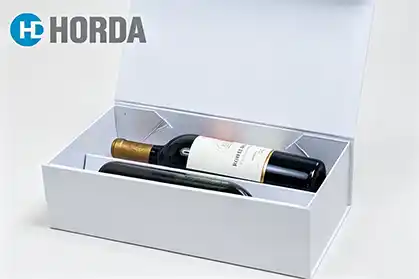
| Large electronics / wine gift sets | 250–400mm | Needs extended folding plate travel |
| Oversized presentation boxes | 400mm+ | Limited machine options; confirm availability |
Before evaluating any specific model, document the smallest and largest boxes you produce—and the aspect ratios in between. A significant portion of new rigid box projects involve non-rectangular footprints or aspect ratios outside the typical 3:1 to 1:3 range. If your order mix includes triangular, pentagonal, or unusually shallow trays, confirm whether the equipment supports custom tooling for those formats. For a deeper look at how custom tooling expands production capability, explore the custom tooling for special box shapes guide.
Changeover time is the hidden productivity factor that specification sheets rarely highlight. A machine rated at 40 pieces per minute but requiring 45 minutes to switch sizes may deliver less daily output than a machine rated at 30 pieces per minute with a 5-minute changeover.
The calculation that matters: Multiply your changeover frequency by the changeover time per switch. For a factory switching sizes 3 times per week with a 45-minute changeover, that is 2.25 hours of lost production weekly—equivalent to over 100 hours annually.
Modern rigid box lines with recipe storage and servo-driven adjustments can reduce changeover to under 10 minutes. The key enablers are:
Recipe storage that remembers optimal parameters (temperature, pressure, folding angles) for each box size
Quick-release tooling that eliminates heavy tools and realignment procedures
CNC programmable positioning that repositions multiple axes simultaneously
The glue system is the circulatory system of a rigid box line. If the gluing station underperforms, every downstream station produces defective boxes—or worse, waste.
Three glue system architectures are common in rigid box production:
| Glue Type | Best For | Considerations |
|---|---|---|
| Cold glue (water-based) | Paper wraps, standard board | Longer set time; requires careful moisture control |
| Hot melt (EVA/PUR) | Fast bonding, synthetic wraps | Higher energy cost; faster line speeds |
| Dual-compatible | Mixed material production | Highest flexibility; higher initial investment |
The critical question is not which glue type is "best"—it is which glue type matches your material mix and production rhythm. A line running primarily paper-wrapped cosmetic boxes with cold glue may struggle when switching to leatherette wraps that require hot melt adhesion.
What to verify: Ask the equipment supplier how the glue system handles viscosity changes across ambient temperature variations, and whether the application pattern can be adjusted for porous versus non-porous wrap materials. According to ISO 15396:2022, documented defect classification and root cause analysis are mandatory elements of certified quality control processes—and glue-related defects are among the most common quality issues in rigid box manufacturing.
Fully automatic rigid box lines reduce labor costs and minimize human error—but they also require higher initial investment and skilled operators for setup and maintenance. The right automation level depends on your order profile, not on a desire for the newest technology.
A practical framework:
Semi-automatic setup: Best for factories with diverse, low-volume orders where manual intervention is acceptable. Lower capital investment, but higher per-unit labor cost.
Fully automatic line: Best for stable, high-volume production with limited size variation. Higher capital investment, but lower per-unit cost at scale.
Modular integrated line: Best for factories transitioning from diverse to more standardized production. Allows phased investment as volume grows.
Consider the skill level of your current workforce. In many markets, operator turnover is a major buying factor, and buyers increasingly prefer automation that reduces dependence on individual craftsmanship while maintaining premium visual quality. If your production team lacks experience with automated equipment, the learning curve for a fully automatic line may offset its labor savings during the first year.
Rigid box precision requirements vary significantly by application. A utility-grade rigid box for industrial parts assembly and a luxury perfume box with leatherette wrap operate at different quality thresholds.
| Application | Typical Precision Requirement | What It Affects |
|---|---|---|
| Industrial / utility rigid boxes | ±0.5mm | Functional fit; minimal visual inspection |
| Mid-tier consumer packaging | ±0.2mm | Clean appearance; acceptable minor deviation |
| Luxury cosmetics / premium gifts | ±0.1mm or better | Edge alignment; corner closure; perceived value |
Visual positioning systems can achieve accuracy up to ±0.05mm, which is critical for high-end packaging where even slight misalignment is visible at the point of sale. If your target market includes luxury cosmetics, premium spirits, or branded electronics packaging, precision below 0.1mm should be a baseline requirement—not a premium upgrade.
Ask the supplier for precision data under sustained production conditions, not just laboratory ideal settings. Precision that degrades after two hours of continuous operation does not deliver the quality your customers expect.
The same rigid box line may need to process paper, fabric, leatherette, and specialty wrap stocks. Each material behaves differently: paper stretches less predictably, fabric has directional stretch, leatherette resists adhesive penetration.
What to ask: How does the gluing system adapt to different material porosities? How do the folding plates adjust for material thickness and stiffness? Can the line handle board thicknesses ranging from 1.0mm to 3.0mm without hardware changes?
The rise of degradable materials—including PLA and bio-based composites—adds another layer of complexity. These materials require precise temperature and pressure control during lamination and shaping, and their processing windows differ significantly from conventional plastics. If your customers are requesting eco-friendly packaging, confirm whether the equipment can handle these materials without major retrofitting.
Equipment reliability matters, but so does the support ecosystem around it. A rigid box line that runs 20 hours per day will eventually require maintenance, spare parts, and technical assistance.
Key support questions:
Spare parts availability: What is the lead time for critical components? Are parts stocked locally or shipped from overseas?
Technical training: Does the supplier provide on-site training for operators and maintenance staff?
Remote diagnostics: Can technicians troubleshoot issues remotely, or is every problem a site visit?
Documentation: Are maintenance manuals and troubleshooting guides available in your language?
The quality of support directly affects your total cost of ownership. A lower-priced machine with poor parts availability may cost more over five years than a higher-priced machine with responsive local support.
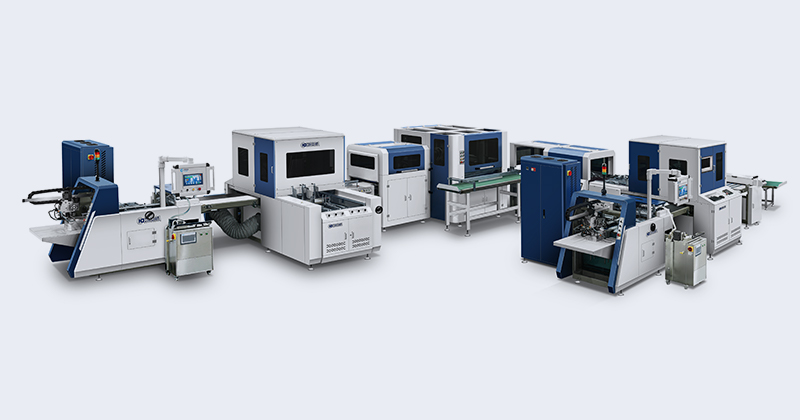
You now have seven questions that surface the most common mismatches between rigid box equipment specifications and real production needs. The answers will not point to a single "right" machine—they will define the boundary conditions within which the right machine for your operation exists.
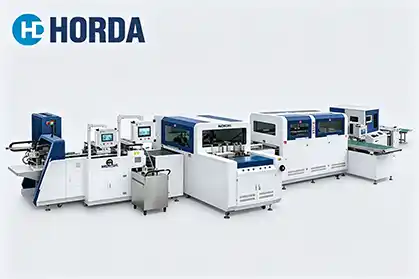
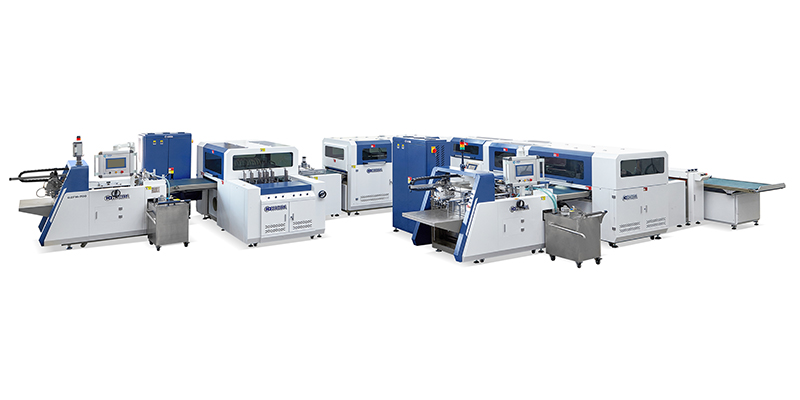
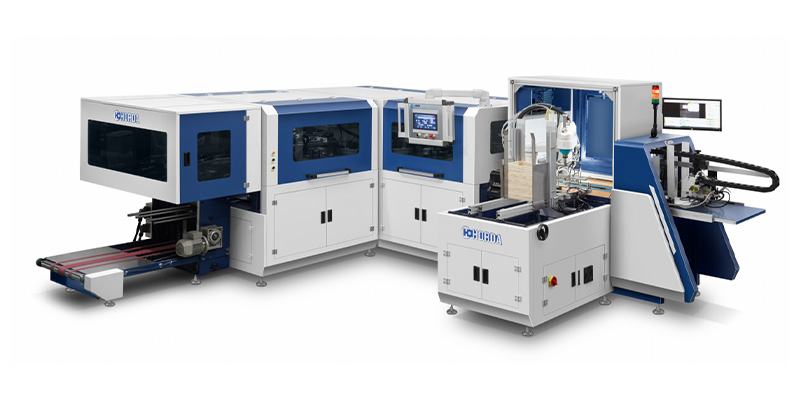
Once you have documented your box size range, changeover frequency, material mix, and precision requirements, comparing the specific specifications of available rigid box production lines becomes the next logical step. You can review the Rigid Box Making Machine series for high-precision applications, or explore Cigarette Wine Packaging solutions for high-volume rigid box production with integrated assembly capabilities.

 English
 Español
 Português