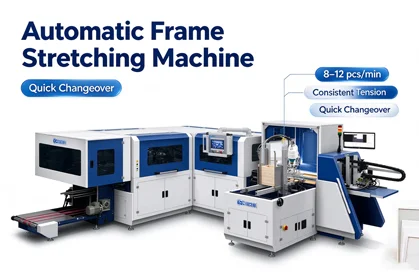
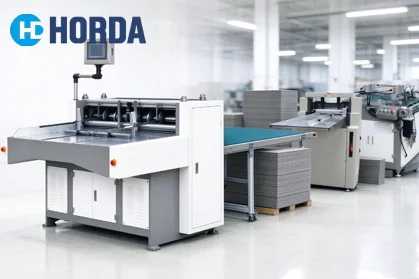
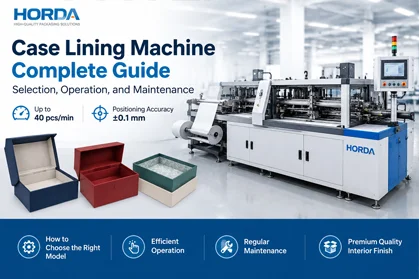
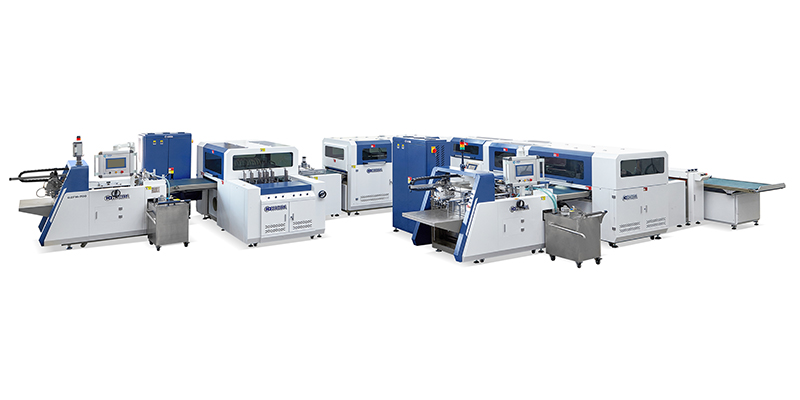
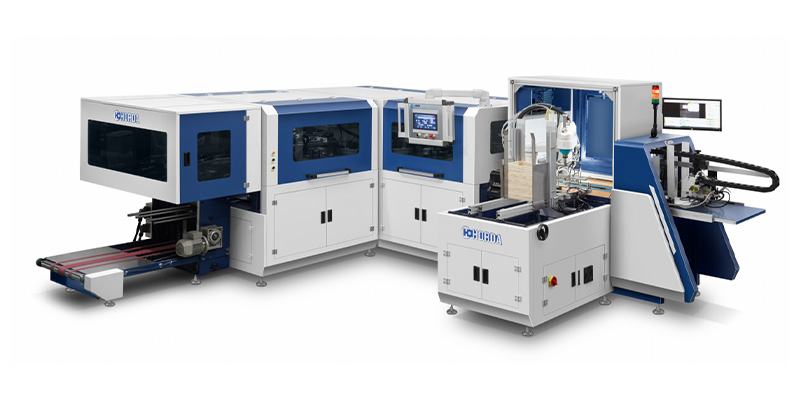
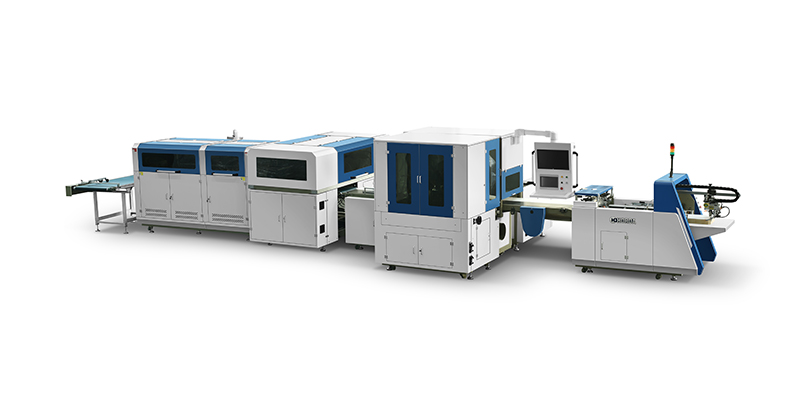
You have seen an automatic cover machine in action. It feeds material, applies glue, folds corners, and ejects a finished cover or box. But what you may not realize is how broadly the same machine architecture can be applied across completely different industries—each with its own material requirements, precision demands, and production rhythms.
Understanding the full range of applications helps you evaluate equipment not just for today’s orders, but for the opportunities you may take on tomorrow. This guide explores five distinct uses of automatic cover machines and what each application reveals about the capabilities you should look for.
Luxury cosmetics packaging is perhaps the most visible application of automatic cover machines. High-end skincare sets, perfume gift boxes, and limited-edition cosmetic collections all rely on rigid boxes with precisely wrapped covers that convey quality at first touch.
Cosmetic boxes are small—often 100mm × 100mm or less—but they must be flawless. The cover material, whether paper, fabric, or leatherette, must wrap around the chipboard with no visible gaps at the corners. Any misalignment of 0.5mm or more creates an edge that catches the eye and diminishes the perceived value of the product inside.
Key requirements for this application:
| Requirement | Why It Matters |
|---|---|
| Positioning accuracy ≤0.1mm | Ensures cover material aligns perfectly with board edges |
| Versatile material handling | Accommodates paper, fabric, leatherette, and specialty stocks |
| Hot stamping and embossing compatibility | Enables decorative finishes that differentiate premium brands |
| Clean adhesive application | Prevents bleed-through that ruins cover appearance |
What to look for: Equipment with CCD vision positioning and servo-driven feeding systems can maintain the sub-millimeter accuracy required for luxury cosmetics applications. For a detailed look at how different machine architectures achieve this precision, explore the Rigid Box Making Machine series specifications.
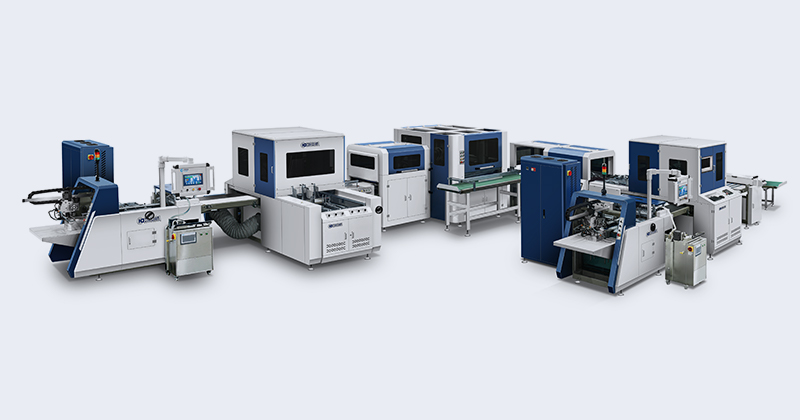
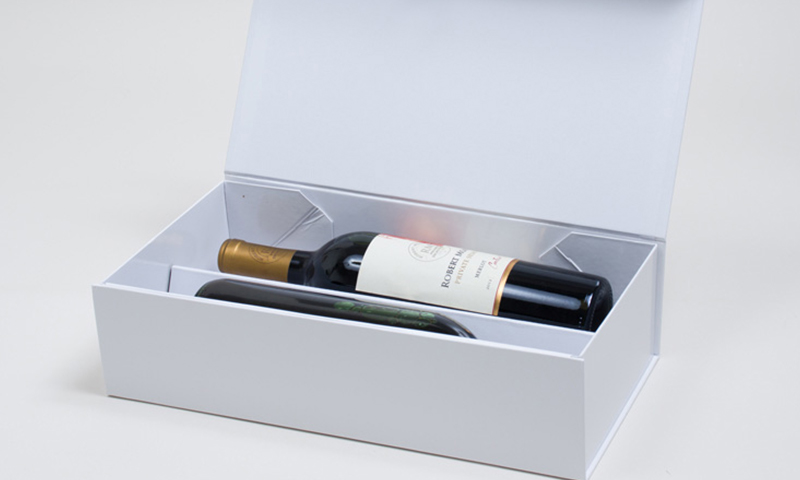
Tobacco and alcohol packaging operates at a different scale from cosmetics. Volumes are higher—often hundreds of thousands of units per order run—and the boxes themselves are typically larger and more structurally complex.
Cigarette boxes are produced in enormous quantities, often on dedicated lines that run the same size and design for months at a time. Wine gift boxes, by contrast, may involve seasonal promotions, multiple SKUs within the same brand family, and frequent design updates that require rapid production changeovers.
The balancing act: This application sits between the high precision of cosmetics and the high volume of mass-market packaging. Equipment must deliver consistent quality at sustained speeds while accommodating size variations between different product lines.
Key requirements:
| Requirement | Why It Matters |
|---|---|
| High-speed sustained output | Meets volume demands of large tobacco and alcohol orders |
| Flexible changeover capability | Accommodates different box sizes and designs across product lines |
| Real-time quality monitoring | Detects dimensional or assembly defects before they reach customers |
| Durable construction | Withstands continuous operation in high-volume production environments |
What to look for: Machines with recipe storage that remembers optimal parameters for each box type can reduce changeover time significantly—critical when switching between cigarette boxes and wine gift boxes on the same line. For insights into production line configurations that handle this diversity, see the Cigarette Wine Packaging solutions overview.
The cover machine originated in the bookbinding industry, and hardcover book production remains a core application. But the category has expanded to include corporate folders, presentation binders, desk calendars, and photo albums—all of which require the same fundamental process: wrapping a cover material around a rigid board.
Book covers are large—often exceeding 300mm × 400mm—and the material must be applied without wrinkling or bubbling across the entire surface. Unlike small cosmetic boxes, where defects are localized at corners, book cover defects are visible across broad flat areas.
Key requirements:
| Requirement | Why It Matters |
|---|---|
| Large-format handling capability | Accommodates oversized covers for books, albums, and calendars |
| Uniform adhesive application | Prevents wrinkling and bubbling across large surface areas |
| Precise corner folding | Creates clean, durable corners that withstand frequent handling |
| Consistent squareness | Ensures the finished cover aligns perfectly with book blocks |
What to look for: Equipment that can handle board sizes up to 750mm × 1350mm while maintaining positioning accuracy across the entire surface. For applications involving both books and boxes on the same line, consider machines with broad size range capabilities. Learn more about Hardcover Books File Folder production requirements.
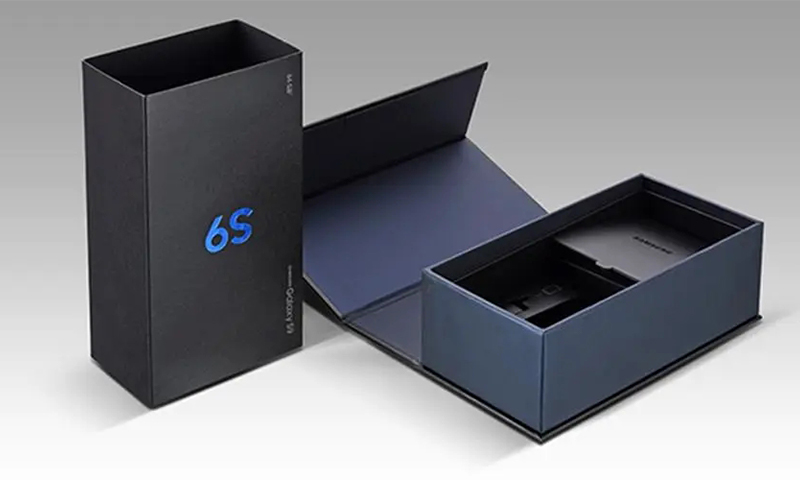
Smartphone packaging has become a design category of its own. Premium phone boxes are rigid, precisely constructed, and often include internal compartments for accessories—all of which must be produced with exacting standards.
Mobile phone boxes are typically mid-sized (150mm–200mm range) but require exceptional precision because the phone itself is a precision device. The box must protect the product during shipping while presenting it as a premium unboxing experience.
The complexity: Many phone boxes include separate inner trays or inserts that hold the device and accessories. This means the production line must handle not only the outer cover but also internal components.
Key requirements:
| Requirement | Why It Matters |
|---|---|
| Precision at every layer | Outer cover and inner inserts must align perfectly |
| Multi-component production | Capability to produce both outer boxes and internal trays |
| Clean, modern aesthetics | Sharp edges, consistent color, and flawless finish |
| Scalable production | Can handle large launch volumes without quality degradation |
What to look for: Integrated production lines that can produce both the outer rigid box and internal inserts in a coordinated workflow. For a comprehensive view of this application, explore Mobile Phone Gifts Box production capabilities.
Not all cover machines produce rigid boxes. Many are configured to produce collapsible boxes—boxes that ship flat and are assembled at the point of use. This application is increasingly important for e-commerce, food delivery, and any industry where shipping costs and storage space are critical concerns.
Collapsible boxes require precise creasing and folding rather than the wrap-and-bond process used for rigid boxes. The machine must create fold lines that allow the box to be erected reliably at the destination, without tearing or warping.
The storage advantage: Collapsible boxes reduce shipping and storage volume by more than 80% compared to assembled rigid packaging. For a manufacturer serving customers who assemble their own packaging, this is a significant competitive advantage.
Key requirements:
| Requirement | Why It Matters |
|---|---|
| Precision creasing | Creates fold lines that assemble correctly every time |
| High-speed operation | Collapsible boxes typically run faster than rigid boxes |
| Material compatibility | Handles cardboard and paperboard of varying thicknesses |
| Flat stacking and collection | Ensures boxes exit the machine in stackable form |
What to look for: Machines with servo-driven folding systems that can monitor and adjust folding force and speed in real time. For a detailed comparison of rigid versus collapsible production approaches, read Rigid Box Line vs Collapsible Box Line.
Looking across these five applications, several patterns emerge that should inform your equipment evaluation:
1. Precision is not optional—but the required precision varies by application. Luxury cosmetics demand ≤0.1mm positioning accuracy. Collapsible boxes can function well with ≤0.5mm. The equipment you choose must match your target application’s precision requirements.
2. Versatility comes with trade-offs. A machine that handles everything from small cosmetic boxes to large book covers may not achieve the top speed of a dedicated line for any single application. But that versatility may be exactly what you need if your order mix is diverse.
3. Material handling capability matters more than you think. The same machine that runs paper covers may struggle with fabric or leatherette. Understanding your material mix is essential before selecting equipment.
4. Changeover speed determines effective output. A machine that runs 40 pieces per minute but takes an hour to change over may deliver less daily output than a machine that runs 30 pieces per minute but changes over in 15 minutes. For manufacturers running multiple applications, changeover time is often the real bottleneck.
You now have a framework for understanding what automatic cover machines can do and what each application demands from the equipment. The key takeaways:
Luxury cosmetics require sub-millimeter precision and decorative finishing capabilities
Cigarette and wine packaging demand high-speed sustained output with flexible changeover
Hardcover books and folders need large-format handling and uniform adhesive application
Mobile phone gift boxes require precision across both outer and inner components
Collapsible boxes prioritize precise creasing and flat stacking for storage efficiency
Once you have identified the applications that matter most to your business—and the precision, speed, and material requirements they entail—comparing the specific specifications of available equipment becomes the next logical step. You can review the rigid box production line for high-precision applications or the collapsible box production line for volume-efficient folding box production.

 English
 Español
 Português