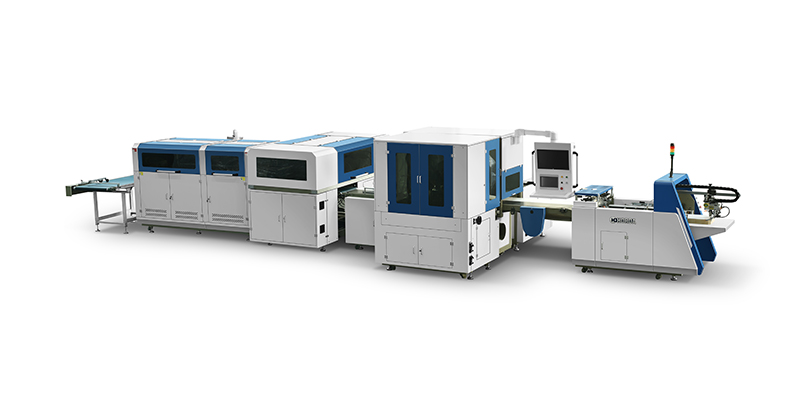
You receive an order for 10,000 luxury cosmetic rigid boxes with intricate cover wrapping. The next week, a gift supplier orders 50,000 collapsible sweet boxes that must ship flat to save freight costs. Your current equipment can handle both—but every time you switch between rigid and collapsible box production, the line stops for adjustments. The question is not “which machine produces faster?”—it’s “which production approach stays productive when your box types keep changing?”
For packaging manufacturers serving diverse industries—cosmetics, tobacco, wine, electronics, and gifting—the ability to produce both rigid and collapsible boxes on the same equipment is increasingly a business necessity. But the choice is not one-size-fits-all. Some operations benefit from a dedicated rigid box line; others are better served by a flexible collapsible box machine. This guide walks through the real factors that determine which approach works for your production reality: changeover time, speed trade-offs, storage economics, and precision requirements.
Many buyers fixate on “pieces per minute” when evaluating box-making equipment. But when you produce both rigid and collapsible boxes on the same line, changeover frequency becomes the true productivity killer.
Switching from rigid box production to collapsible box production involves more than just swapping molds or tooling. The operator must adjust:
Material feeding and alignment — rigid boxes use thick chipboard wrapped in decorative paper; collapsible boxes use cardboard that folds into shape
Folding mechanism settings — rigid boxes require precise four-side folding with wrap alignment; collapsible boxes need accurate creasing for proper assembly at destination
Gluing system parameters — different box types require different adhesive types and application patterns
Ejection and stacking — rigid boxes are stacked assembled; collapsible boxes are collected flat
On a conventional machine, this changeover process can take 45–60 minutes. For a shop that switches between box types 3–4 times per week, these hours add up quickly.
Modern intelligent machines with recipe storage and servo-driven adjustments can reduce changeover time significantly. The key enablers are:
Recipe storage — the machine remembers optimal parameters (temperature, pressure, speed, folding angles) for each box type
Quick-change tooling systems — molds and folding components can be swapped without heavy tools or realignment
Servo-driven adjustments — multiple axes reposition simultaneously with one command
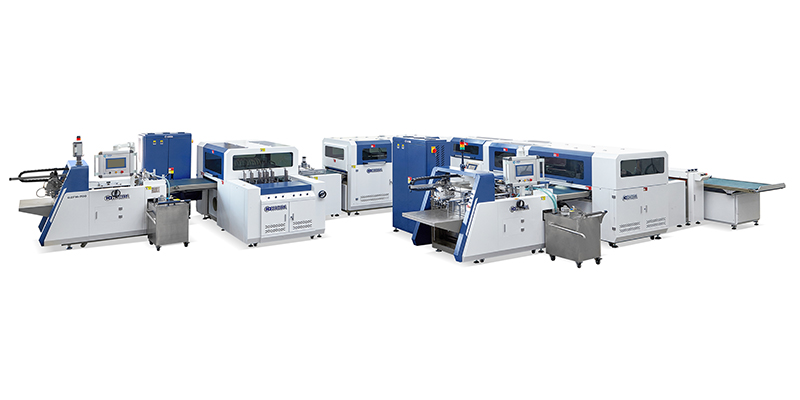
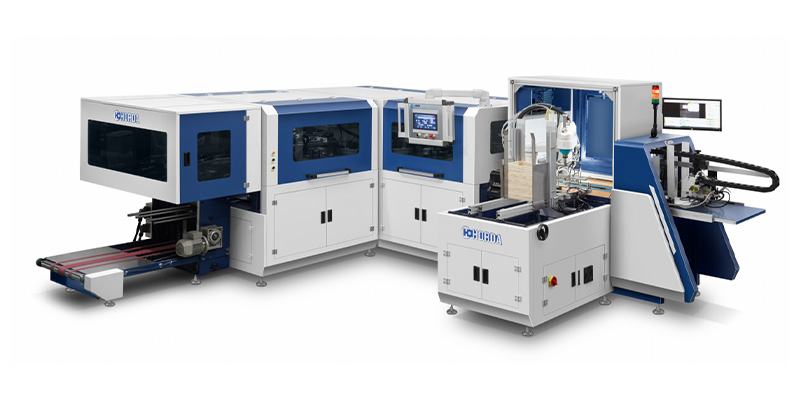
For a packaging converter running 5+ box types weekly, the time saved across changeovers can exceed 4 hours per week. That is productive capacity recovered without buying a second machine.To understand how different machine architectures handle changeover efficiency, explore the Rigid Box Making Machine specifications, including size range and setup time details.
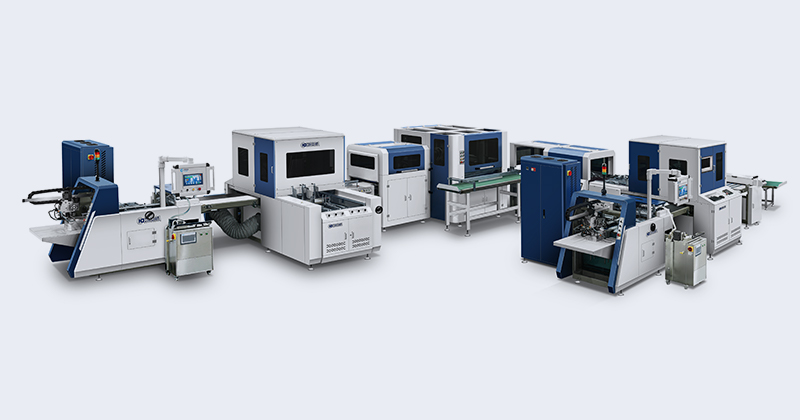
There is no universally “right” answer. The choice between a single flexible line and multiple dedicated lines depends on your specific production profile.
| Factor | Single Flexible Line | Dedicated Rigid + Collapsible Lines |
|---|---|---|
| Changeover time | 15–60 minutes per switch | Zero (each line runs its own box type) |
| Capital investment | Lower (one machine) | Higher (two machines) |
| Floor space | Less | More |
| Speed per box type | May be optimized for one, slower on the other | Each line optimized for its specific box type |
| Order flexibility | High—can adapt to any order mix | Low—requires minimum volume per box type |
| Maintenance complexity | One machine to maintain | Two machines, two spare parts inventories |
| Ideal for | Diverse orders, frequent type changes | High-volume standard boxes, limited SKUs |
1. How many box types do you run weekly?
If you produce 1–2 box types predominantly, with occasional runs of other types, a dedicated line for your main type plus a flexible secondary machine may be the most cost-effective approach.
If you regularly produce 5+ box types in small to medium batches, a single flexible machine with fast changeover likely makes more sense than buying separate lines for each type.
2. What is your weekly order volume per box type?
A basic rule of thumb: if your volume for a given box type exceeds 200,000 units per week, a dedicated line for that type may be justified. For lower volumes, the capital cost of a dedicated line is hard to recover.
3. How predictable is your order mix?
If your customers order the same box types month after month, dedicated lines reduce changeover waste. If orders are unpredictable—seasonal peaks, new product launches, custom promotions—flexibility becomes a competitive advantage.
Some manufacturers choose to run two machines simultaneously: one for rigid boxes and one for collapsible boxes. This approach eliminates changeover downtime entirely and allows simultaneous processing of mixed orders. However, it requires significant capital investment and floor space—and each line must have sufficient volume to justify its operation.For a detailed look at collapsible box production capabilities and how they handle diverse order types, see the Collapsible Box Making Machine overview.
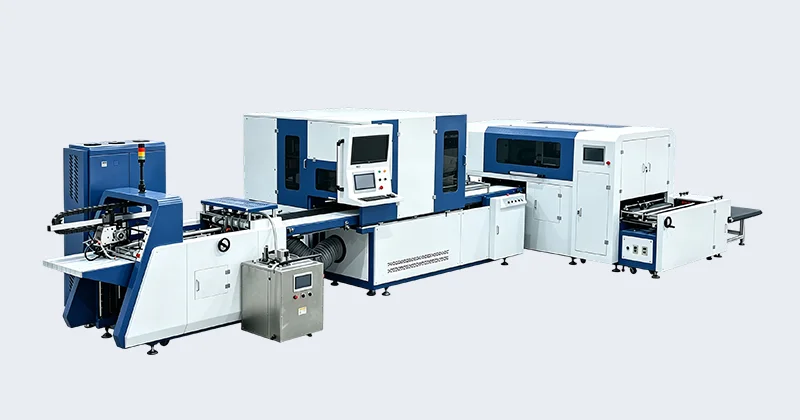
A machine that runs 40 pieces per minute on one box type may run significantly slower on another. This is one of the most overlooked factors in equipment selection.
Box type directly affects cycle time. Collapsible boxes typically run faster because the forming cycle is simpler—less material to fold, less heating, less pressing. Rigid boxes require additional steps: wrapping decorative paper around chipboard, four-side folding, precise corner alignment, and sometimes inner lining application.
Rigid box production lines with integrated lining functions may run 20–30% slower than collapsible box lines on the same machine.
Some machines achieve high speeds but only within a narrow box type range. For example, a model might run 40 pieces per minute on collapsible boxes but only 25 pieces per minute on rigid boxes. A more flexible model might cover both box types at 30–35 pieces per minute consistently.
The pattern to observe is not the highest number—it is how speed varies across box types. A machine that covers your entire production range at a slightly lower but consistent speed may deliver higher effective output than a faster machine that forces frequent changeovers or cannot handle your rigid box requirements at all.
| Box Type | Typical Speed Range (PCS/MIN) | Notes |
|---|---|---|
| Collapsible boxes (standard) | 30–40 | Simpler forming, fewer steps |
| Rigid boxes (standard) | 25–35 | Requires wrapping, folding, and pressing |
| Rigid boxes with inner lining | 20–30 | Additional lamination step increases cycle time |
| Large-format rigid boxes | 15–25 | Longer heating and pressing cycles |
One of the most significant differences between rigid and collapsible boxes is how they are stored and shipped—and this has a direct impact on your production line decision.
Rigid boxes are pre-assembled, non-collapsible structures. They maintain their three-dimensional form throughout storage and shipping. This means they occupy full volume from the moment they leave the production line.
Collapsible boxes ship flat and are assembled at the point of use. They can reduce shipping and storage volume by more than 80% compared to assembled rigid packaging.
| Factor | Rigid Boxes | Collapsible Boxes |
|---|---|---|
| Storage space required | Full volume | 80%+ less space |
| Shipping cost per unit | Higher | Significantly lower |
| Assembly required at destination | No | Yes |
| Damage risk during transit | Higher (corners crush) | Lower (flat stacks) |
If your customers require assembled boxes ready for filling, rigid box production is necessary. If your customers are willing to assemble at their facility—or if you serve markets where freight costs are a major concern—collapsible boxes offer a clear economic advantage.For a practical guide on integrating auxiliary equipment to maximize output across different box types, see our Auxiliary Equipment for Paper Products overview.
The precision demands of rigid and collapsible boxes are fundamentally different—and this affects which equipment features matter most.
Rigid boxes are premium products. The cover material must wrap around the chipboard cleanly on all four sides. Any misalignment—a corner that does not close, an edge that overlaps unevenly—is immediately visible and cannot be corrected after the fact.
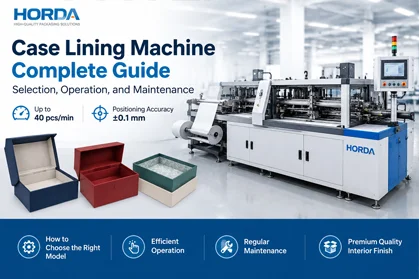
For luxury applications—cosmetics, wine, tobacco, mobile phone gift boxes—achieving ≤0.1mm positioning accuracy is essential.
Collapsible boxes prioritize function over appearance. The key requirement is that the fold lines are precise enough for the box to assemble correctly at the destination. Misaligned fold lines cause the box to warp, fail to lock, or appear crooked when erected.
For collapsible boxes, position error within ≤0.5mm is typically sufficient—and servo-driven folding systems can achieve this consistently.
A rigid box line requires advanced positioning technology—often including CCD vision systems and high-precision servo controls. A collapsible box line prioritizes folding accuracy and throughput.
If you need both capabilities, look for equipment that offers:
Recipe storage for quick switching between rigid and collapsible modes
Adjustable folding parameters to accommodate different material thicknesses
Vision-assisted positioning for rigid box precision when needed
To see how case lining integration affects precision in luxury packaging applications, explore our Luxury & Cosmetics Packaging solutions.
A mid-sized packaging manufacturer serves cosmetic brands, wine distributors, and gift suppliers. Weekly orders include rigid cosmetic boxes, collapsible sweet boxes, and rigid wine gift boxes—with volumes varying by season.
Key considerations:
Changeovers happen 3–5 times per week
No single box type dominates volume
Order mix is unpredictable
Recommended approach: One flexible machine with quick-change capability and recipe storage. The investment in fast changeover (under 30 minutes) pays for itself within months by recovering productive hours.
Expected outcome: Effective daily output of 15,000–20,000 boxes across multiple types, with changeover downtime under 3 hours per week.
A large manufacturer supplies a national tobacco brand with rigid cigarette boxes exclusively. Weekly volume exceeds 200,000 boxes.
Key considerations:
Only one box type, high volume
Changeovers are predictable and infrequent
Maximum speed per box is the priority
Recommended approach: A dedicated rigid box line optimized for cigarette box specifications. No changeovers means zero downtime between order runs. Each parameter can be fine-tuned for the specific box type.
Expected outcome: Daily output exceeding 30,000 boxes, with consistent quality and no changeover-related downtime.
Understanding the factors that affect rigid vs. collapsible box production is the first step in making an informed equipment decision. The key takeaways:
Changeover time matters more than brochure speed when you run multiple box types—a 30-minute changeover vs. 60 minutes can recover 2+ hours of production weekly
Speed varies by box type — rigid boxes with lining run 20–30% slower than collapsible boxes on the same machine
Storage economics differ significantly — collapsible boxes reduce shipping volume by 80%+ compared to rigid boxes
Precision requirements are not the same — rigid boxes need ≤0.1mm accuracy; collapsible boxes can function well with ≤0.5mm
One flexible line vs. multiple dedicated lines depends on your order volume, box type variety, and predictability
Recipe storage and quick-change tooling are not nice-to-have — they are essential for mixed production efficiency
Once you have clarified these key decision factors—your typical box type mix, changeover frequency, weekly volume per type, and precision requirements—comparing the specific specifications of available equipment becomes the next logical step. You can review Rigid Box Making Machine for high-precision applications or the Collapsible Box Making Machine for volume-efficient folding box production.For practical guidance on production line configuration that sustains output across frequent changeovers, explore our Case Lining Machine solutions for integrated production efficiency.

 English
 Español
 Português